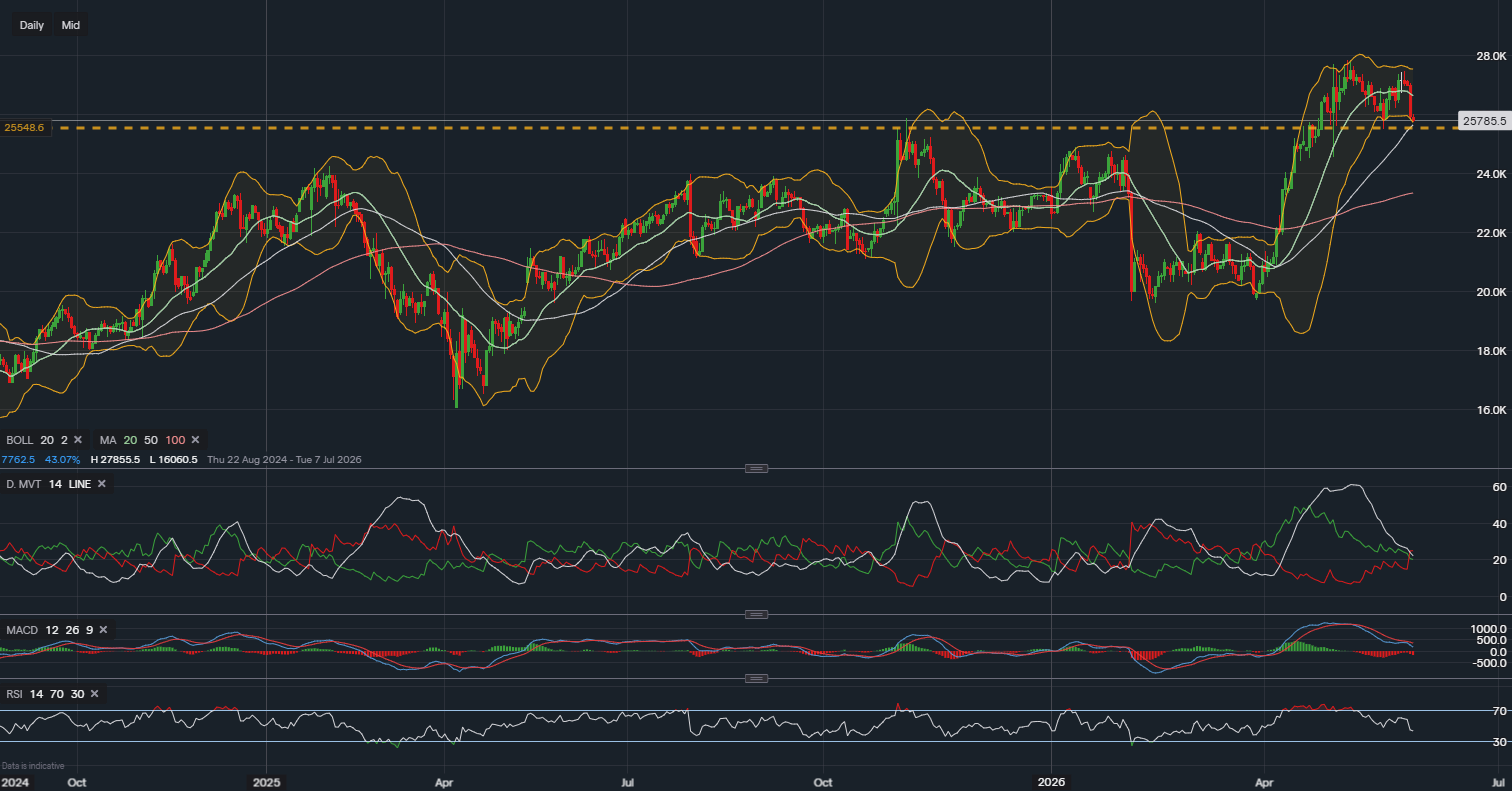
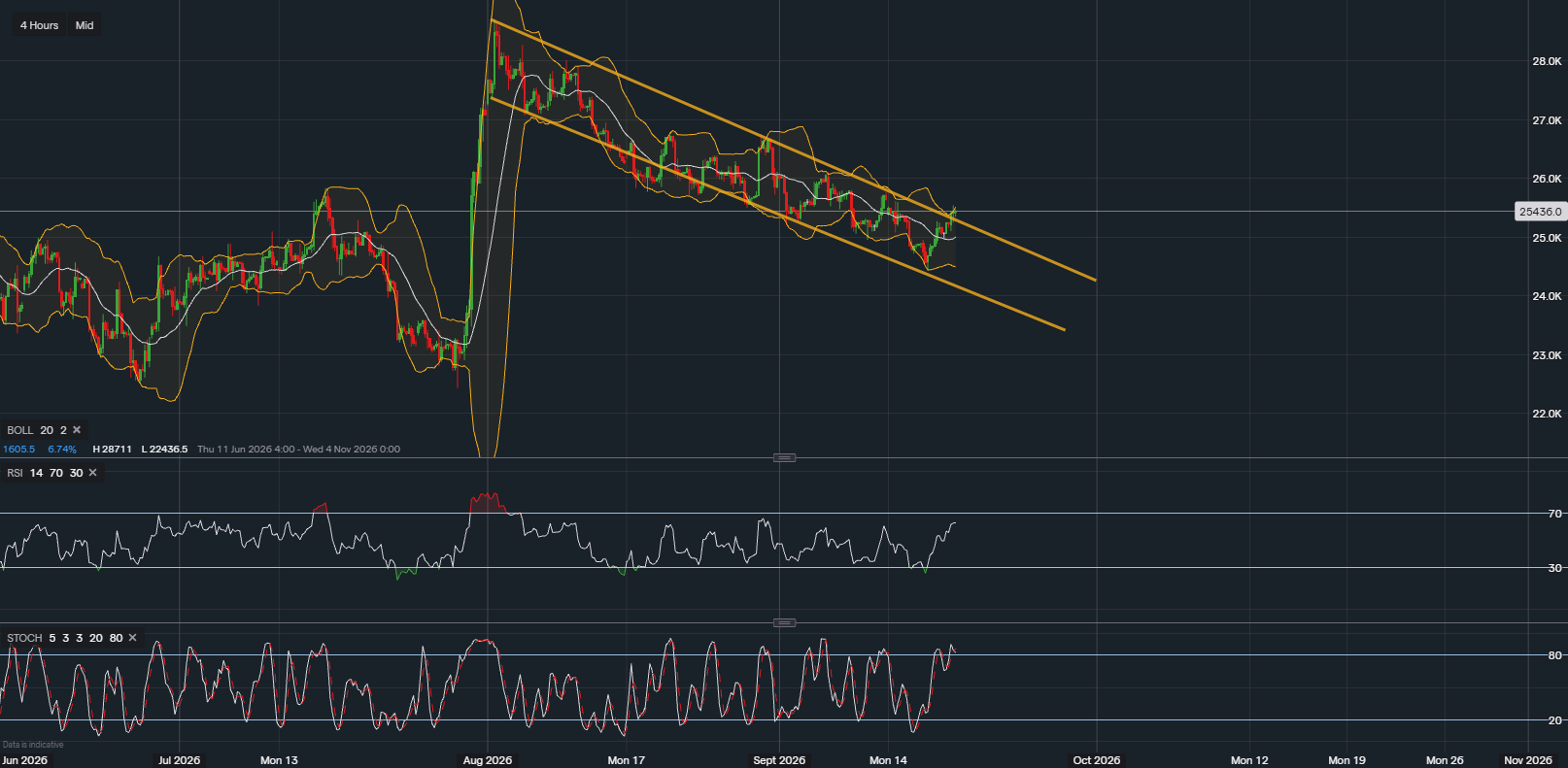
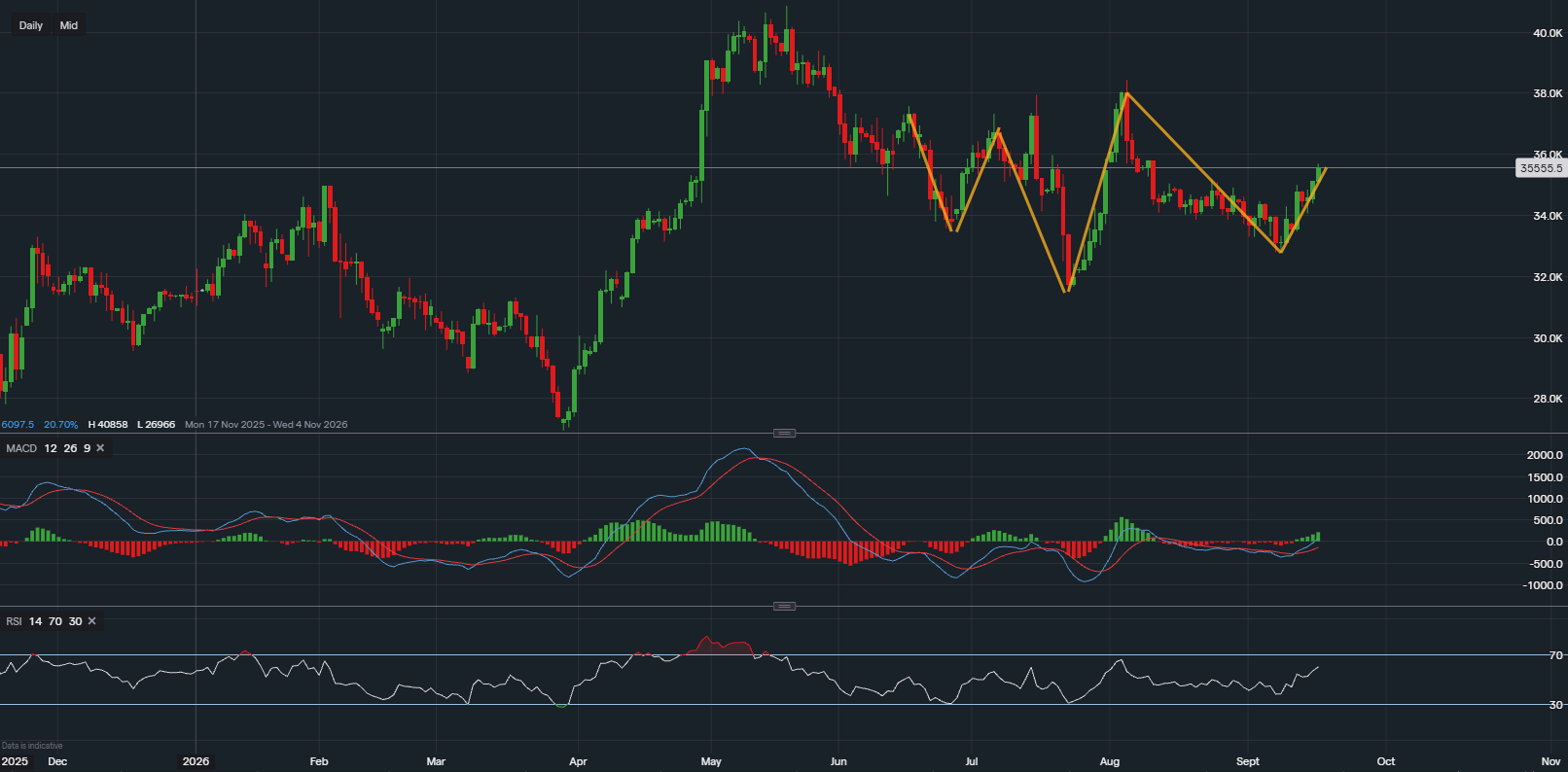
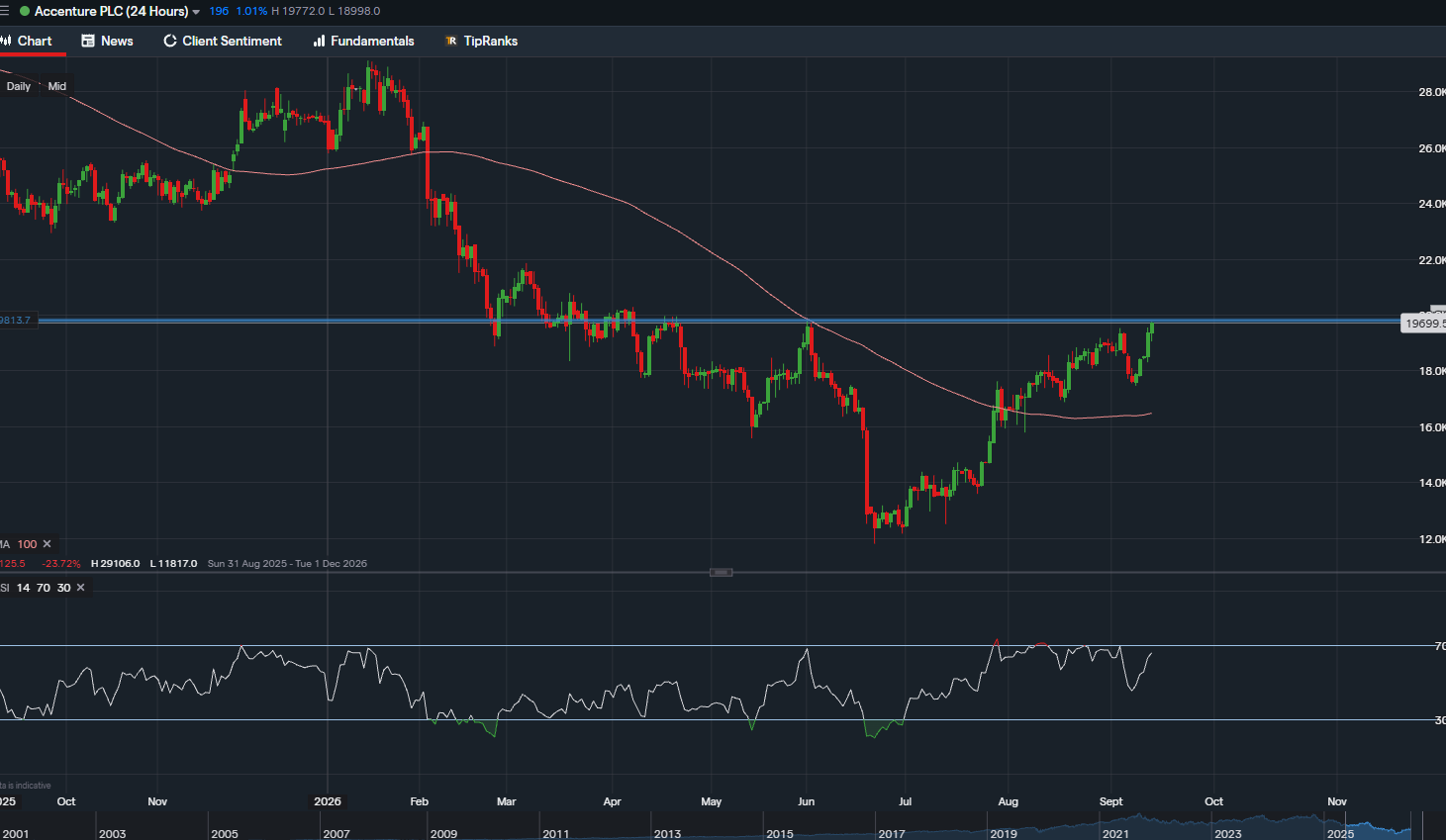
After what initially looked like a healthy price pullback followed by continued bullish growth, Amazon stock has now broken market structure to the downside. This move can likely be attributed to profit-taking after a strong rally, alongside renewed investor concern over Amazon’s heavy AI and cloud infrastructure spending, which could pressure future margins despite otherwise solid earnings.
From a technical analysis perspective, Amazon has shifted into bearish short-term momentum. The MACD indicator is pointing towards stronger downside pressure, while the Directional Movement Index is also suggesting weakening bullish momentum. The RSI currently sits at 43, leaving room for further bearish price action before the stock reaches oversold territory. In addition, Amazon’s share price has broken below the 20-day moving average and is now testing the 50-day moving average, a key level traders should continue to monitor.
However, Amazon may still see a short-term bullish pullback if buyers step in around the nearby support level of $257.87, especially with the stock currently trading near the lower Bollinger Band. This could provide a potential area for a technical bounce, although confirmation would be needed before assuming a reversal.
From a fundamental analysis perspective, Amazon remains a strong business. The stock currently trades on a P/E ratio of 31.22, with an improved forward P/E ratio of 25.96, suggesting stronger expected future earnings. Based on these valuation figures, Amazon has an estimated upside range of $260.41 to $286.25, representing potential gains of around 1.01% to 11.03%. This is further supported by analyst price targets of $319.14, implying a potential upside of 23.79%. These figures suggest that Amazon may still be undervalued at current levels, increasing the potential for longer-term upside.
Outlook for traders and investors: despite Amazon’s strong fundamentals, short-term technical indicators currently point towards further price weakness. Traders and investors should monitor how Amazon’s share price reacts around the 50-day moving average, key support levels, and the lower Bollinger Band. A confirmed reversal signal would be needed before confidence returns to the bullish case.