Analysis
Broadcom Stock Outlook: Is AVGO Becoming a Buying Opportunity?
$364.30
11 Sep 2026, 15:00
Neutral


Join Minipip Academy and access free courses in investing, trading, economics, and more.
Sign Up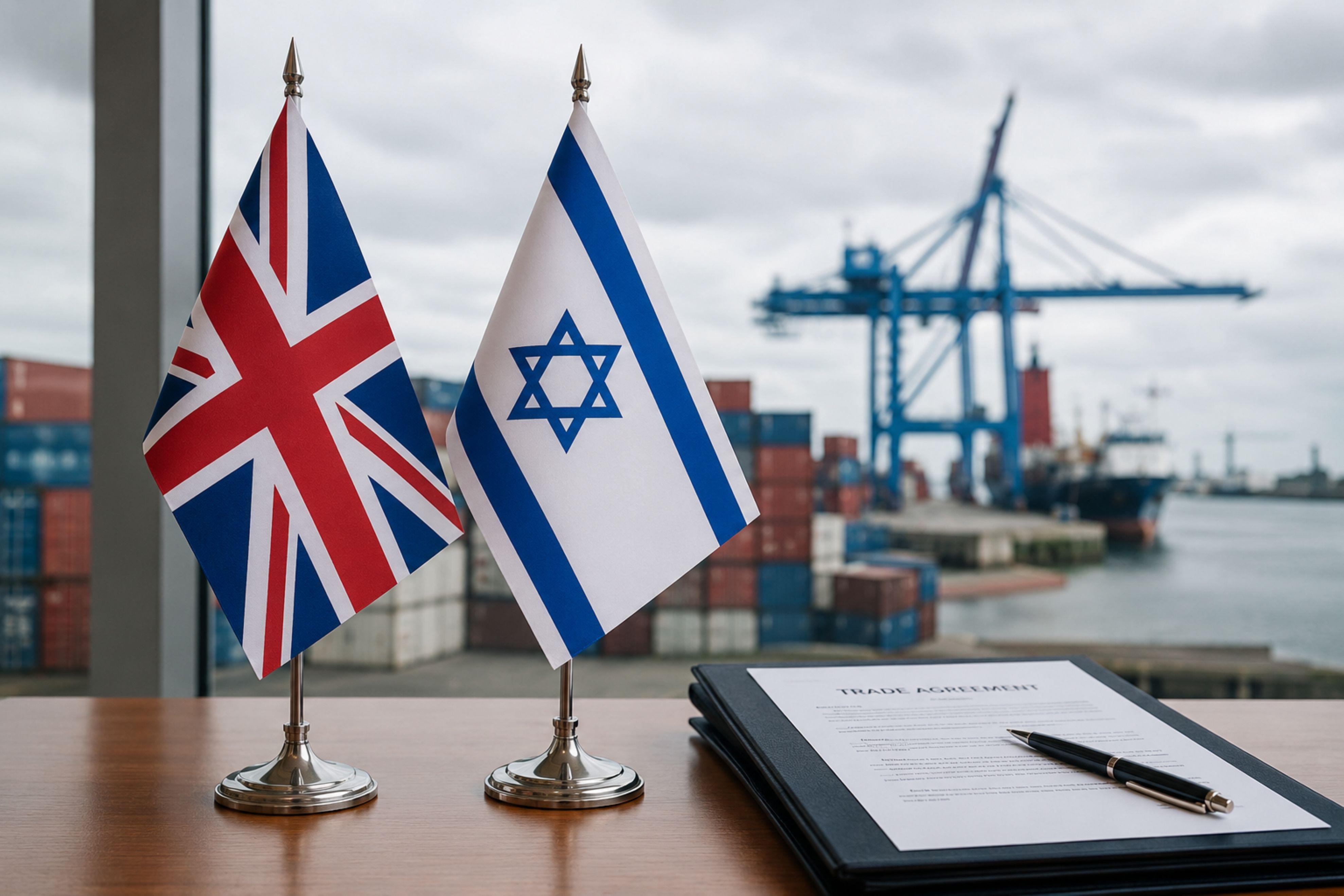
AI


The Department for Business and Trade carried out an impact assessment in August 2025 into whether the UK-Israel Trade Partnership Agreement should be paused. The agreement, signed in 2019 as a post-Brexit continuity deal, allows many Israeli goods to enter the UK with preferential tariff treatment.
The assessment was understood to be linked to concerns over Israel’s actions in Gaza and the West Bank. However, the agreement remains in force, and the government has not published the details of the assessment or explained why suspension was not pursued.
The issue became more sensitive after the government suspended free trade deal talks with Israel in May 2025. At the time, then Foreign Secretary David Lammy strongly criticised comments made by Israel’s defence minister about Gaza, describing them as “repellent” and “monstrous”.
Despite political pressure, ministers warned that pausing preferential trade treatment could have economic consequences. In October, trade minister Chris Bryant told MPs that exports to Israel support thousands of UK jobs and that suspension could create unpredictable disruption for British businesses.
The government did not reveal to MPs or the public that it had been assessing a possible suspension. The information only emerged after campaign group Global Justice Now submitted a freedom of information request. Even then, the Department for Business and Trade withheld details on:
For markets and investments, the story highlights how political and ethical concerns can increasingly affect trade policy. Investors are already paying more attention to geopolitical risk, supply chains and government intervention. If trade agreements become more vulnerable to suspension, companies with international exposure may face greater uncertainty.
Sectors most likely to watch this closely include:
The timing is also important. The assessment took place in August 2025, when famine had been declared in Gaza and the European Union was under pressure to suspend parts of its own agreement with Israel. It also followed the International Court of Justice advisory opinion, which said states must prevent trade or actions that support Israel’s settlement policy in occupied Palestinian territories.
From an investment perspective, this could encourage fund managers to examine political risk more carefully when valuing companies with exposure to controversial markets. It may also strengthen the role of ESG screening, human rights due diligence and supply-chain transparency in portfolio decisions.
The UK considered suspending preferential trade arrangements with Israel but did not go ahead with the move. The government appears to have balanced political and humanitarian concerns against the potential economic impact on British businesses and jobs.
This story matters because it shows that trade policy is becoming more closely linked to foreign policy, ethics and geopolitical pressure. For investors, the key lesson is that political risk can affect markets even when no immediate policy change takes place.
If similar reviews become more common, businesses may need to prepare for greater uncertainty around international trade agreements. For markets, that could mean higher risk premiums for companies exposed to politically sensitive regions, while investors may increasingly favour firms with clearer supply chains and lower geopolitical exposure.
Sources: (SKYMoney.com, Reuters.com)

Tradable assets:
Min.Deposit:
Max Leverage:
FCA:

Rating:
 Earnings Calendar
  Economic Calendar
  VAT Calculator
  Tax Free Childcare Calculator
 Percentage Calculator
 Compound Interest Calculator
  Loan Overpayment Calculator
 Mortgage Calculator
 Credit Card Calculator
 Investing
  Economics
 Trading
  Technical Analysis
  Personal Finance
 Calculator