News
What Labour’s Leaked Plans Could Mean for Your Money
10 Oct 2026, 12:26


Join Minipip Academy and access free courses in investing, trading, economics, and more.
Sign Up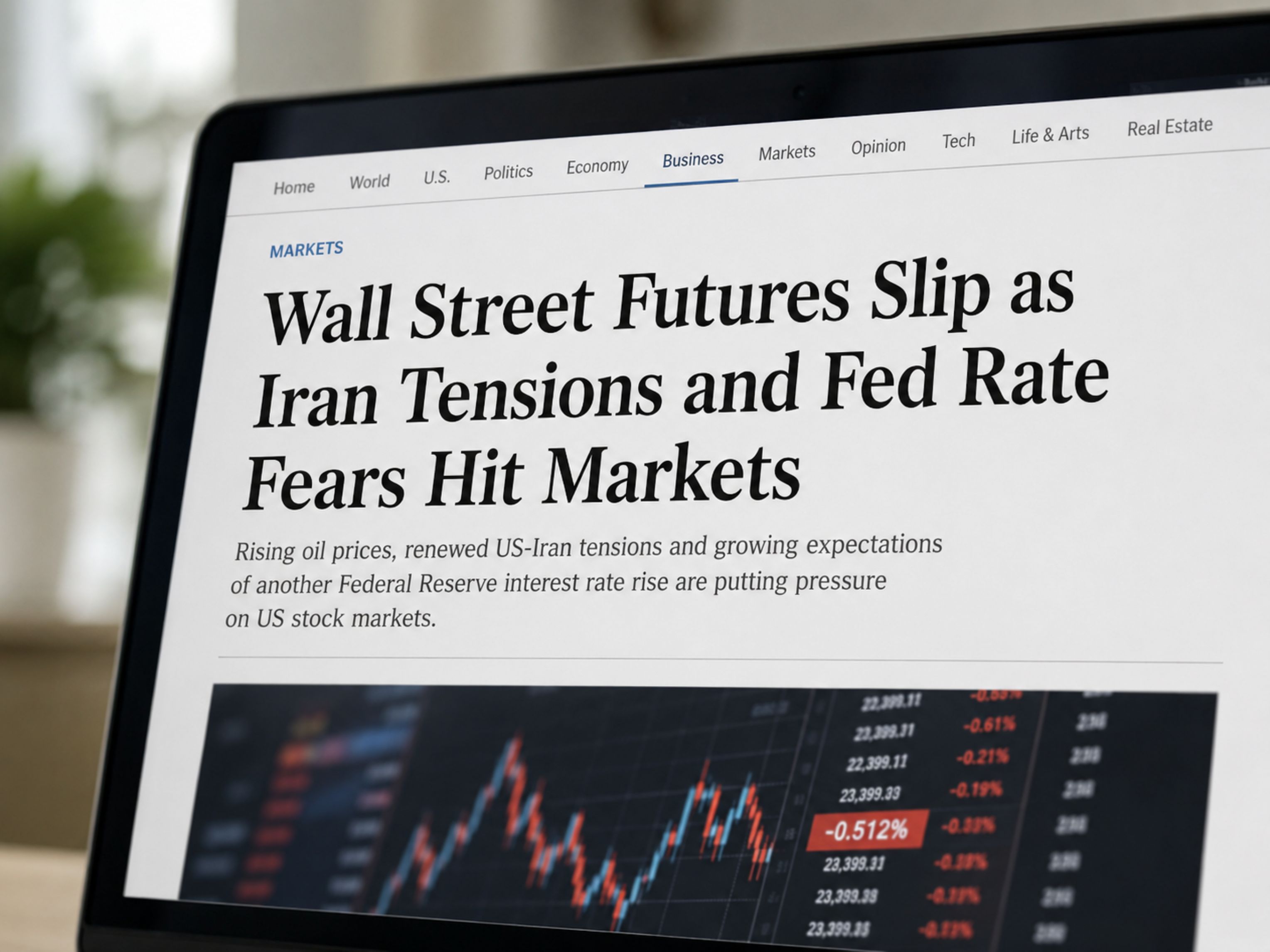
AI generated


Wall Street futures moved lower on Monday as investors reacted to renewed military tensions in the Middle East and growing expectations that the US Federal Reserve could raise interest rates again.
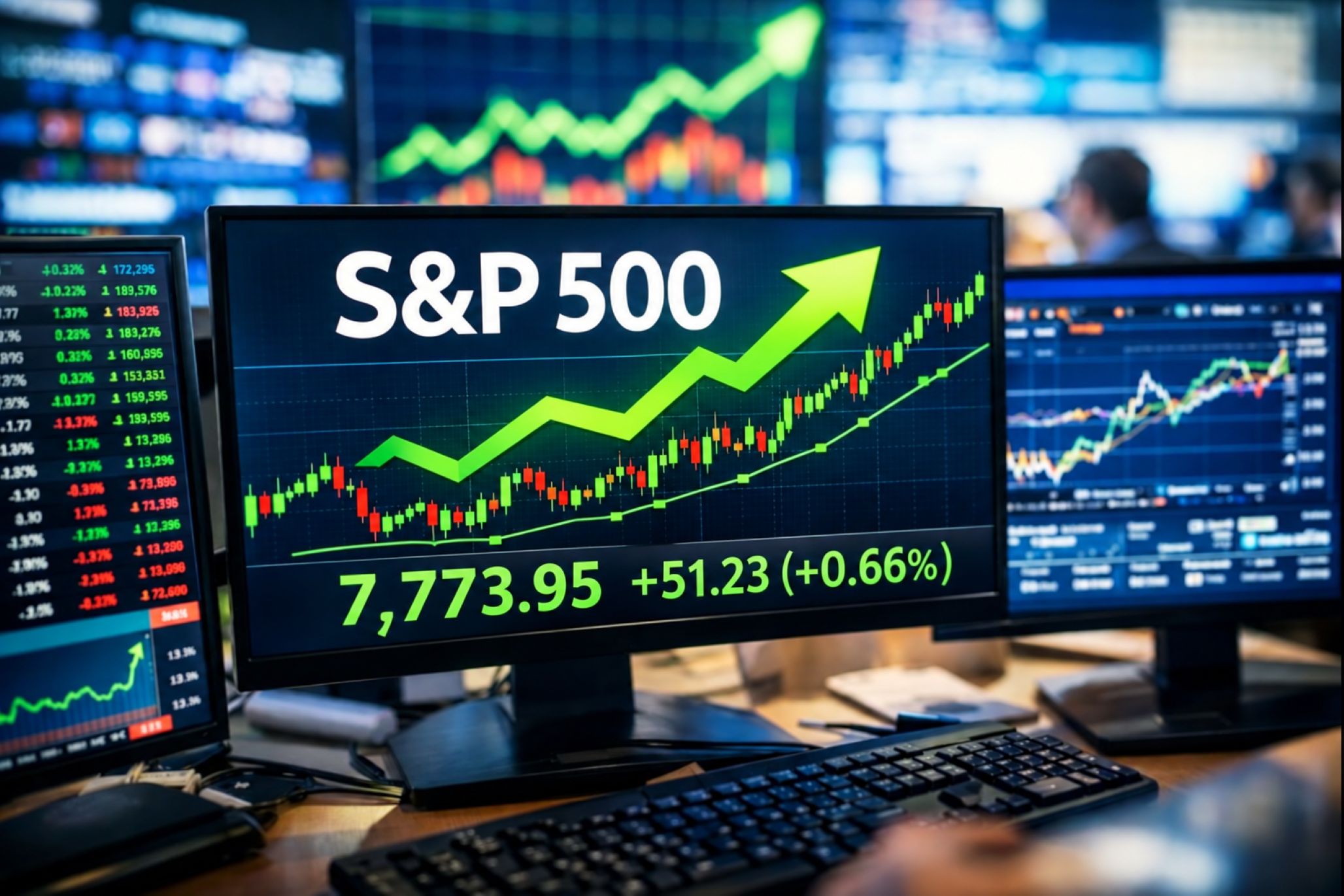
S&P 500 futures fell around 0.13%, while Dow Jones futures declined 0.19%. Nasdaq 100 futures were broadly flat, with technology and semiconductor shares continuing to face pressure from higher bond yields.
The weakness follows a volatile Friday session, when US stocks gave up earlier gains after Federal Reserve Chair Kevin Warsh warned that more work may be needed to bring inflation back towards the Fed's 2% target.
US-Iran Tensions Push Oil Above $90
Geopolitical concerns returned to the markets following fresh military action involving the United States and Iran.
US forces carried out air strikes against two Iranian missile launchers on Larak Island in the Strait of Hormuz. Iran subsequently responded with strikes aimed at US military positions in Jordan.
Market concerns increased further after US President Donald Trump warned that Iran's Kharg Island oil export terminal could potentially become a target.
The escalation had an immediate effect on commodity markets:
The Strait of Hormuz is one of the world's most important oil shipping routes. Any disruption could restrict energy supplies and push oil and fuel prices higher.
For investors, rising energy costs are particularly important because they can increase costs for businesses and consumers, potentially making inflation harder to control.
Federal Reserve Rate Rise Odds Climb
Interest rates are creating another challenge for Wall Street.
Following Warsh's speech at the Jackson Hole symposium, traders increased their expectations of another Federal Reserve rate rise.
Markets are now pricing in close to a 60% probability of a 0.25 percentage point increase at the Fed's 16 September meeting, compared with around 35% before his speech.
Warsh did not explicitly promise another rate rise, but investors interpreted his comments as a signal that tighter monetary policy remains possible if inflation continues to prove difficult to control.
Higher interest rate expectations also pushed US Treasury yields upwards.
This can put pressure on expensive growth stocks, particularly technology and semiconductor companies, because higher bond yields can make safer investments more attractive while reducing the present value investors place on future company earnings.
US Jobs Data Could Drive the Next Market Move
Investors will now turn their attention towards several important US economic releases.
Key events include:
The employment figures could help investors judge whether the US economy remains strong enough to cope with higher interest rates.
Conclusion
Wall Street is currently facing pressure from two directions: escalating Middle East tensions are pushing oil prices higher, while investors are becoming increasingly concerned that the Federal Reserve could raise interest rates again.
For traders, oil prices, bond yields and upcoming US employment figures are therefore likely to remain major drivers of market sentiment over the coming days.
Sources: (Investing.com, Reuters.com)

Tradable assets:
Min.Deposit:
Max Leverage:
FCA:

Rating:
 Earnings Calendar
  Economic Calendar
  VAT Calculator
  Tax Free Childcare Calculator
 Percentage Calculator
 Compound Interest Calculator
  Loan Overpayment Calculator
 Mortgage Calculator
 Credit Card Calculator
 Investing
  Economics
 Trading
  Technical Analysis
  Personal Finance
 Calculator