News
S&P 500 Hits Record High as Oil Prices and Treasury Yields Fall
06 Oct 2026, 15:23


Join Minipip Academy and access free courses in investing, trading, economics, and more.
Sign Up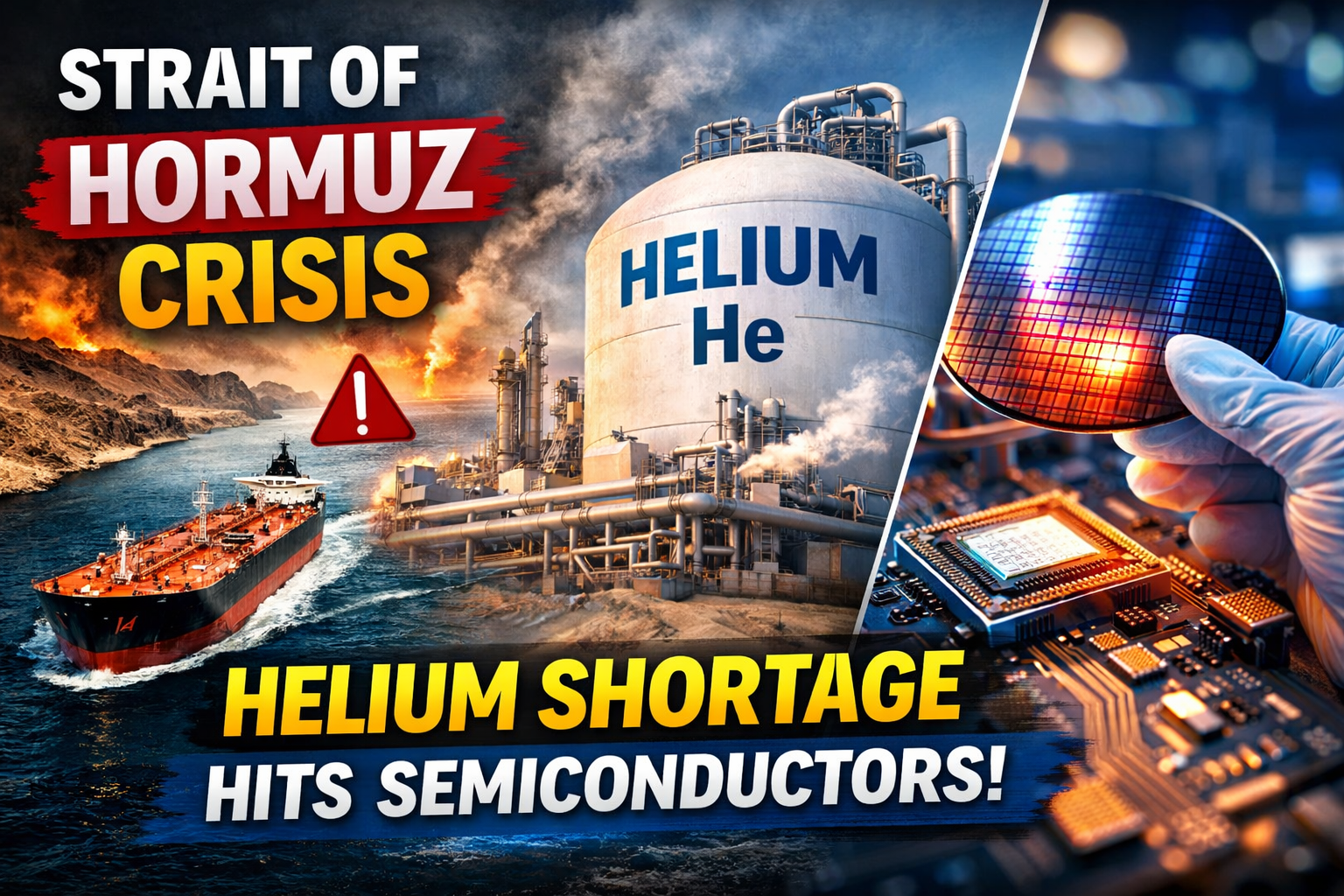
Strait of Hormuz Disruption Threatens Helium Supply and Semiconductor Production


Tensions surrounding the Strait of Hormuz are once again sending shockwaves through global supply chains, but beyond oil, a lesser-known yet critical resource is now in focus: helium. The disruption of shipments through this narrow waterway is raising concerns about supply shortages, with potentially serious implications for the global semiconductor industry.
A Hidden Dependency on Helium
While commonly associated with balloons, helium is a vital industrial gas used in advanced manufacturing. In semiconductor fabrication, helium plays a crucial role in cooling systems, leak detection, and maintaining the ultra-clean environments required for chip production.
A significant portion of the world’s helium supply originates from the Middle East, particularly Qatar, one of the largest exporters globally. Much of this supply is transported via routes that pass through the Strait of Hormuz. Any disruption to shipping in this region therefore creates immediate bottlenecks in global helium distribution.
As shipments slow or halt, supply tightens, and prices tend to rise rapidly due to the limited number of alternative sources.
Impact on Semiconductor Manufacturing
The semiconductor sector, already sensitive to supply chain disruptions, is particularly exposed. Companies such as TSMC and Intel rely on consistent helium supplies to maintain high-precision fabrication processes.
Helium shortages can lead to:
Unlike some raw materials, helium cannot be easily substituted in many of these applications. This makes the semiconductor industry especially vulnerable during supply shocks.
Supply Chain Pressure Builds
The current disruption has already triggered concerns among suppliers and manufacturers. Spot prices for helium are beginning to climb, and long-term contracts are being reassessed as buyers seek to secure guaranteed supply.
At the same time, logistical challenges are compounding the issue. Even where helium production remains stable, the inability to transport it efficiently through the Strait of Hormuz creates delays that ripple across global markets.
This situation echoes previous helium shortages, where limited production capacity and geopolitical tensions led to significant price spikes and rationing.
Broader Market Implications
The knock-on effects extend beyond chipmakers. Semiconductors underpin a vast range of industries, from consumer electronics to automotive manufacturing and artificial intelligence infrastructure. Any disruption in chip production can therefore cascade into wider economic impacts.
In particular, sectors already facing tight chip supply may see renewed constraints, potentially delaying product launches and increasing costs for end consumers.
What to Expect Next
The outlook depends heavily on the duration of the disruption. If shipping through the Strait resumes quickly, helium markets may stabilise before significant long-term damage occurs. However, a prolonged closure could force semiconductor manufacturers to adjust production schedules and seek alternative, often more expensive, supply routes.
In the longer term, this episode may accelerate efforts to diversify helium sourcing and invest in recycling technologies within semiconductor facilities. For now, though, the situation highlights a critical vulnerability: even niche resources like helium can become major pressure points in an increasingly interconnected global supply chain.

Tradable assets:
Min.Deposit:
Max Leverage:
FCA:

Rating:
 Earnings Calendar
  Economic Calendar
  VAT Calculator
  Tax Free Childcare Calculator
 Percentage Calculator
 Compound Interest Calculator
  Loan Overpayment Calculator
 Mortgage Calculator
 Credit Card Calculator
 Investing
  Economics
 Trading
  Technical Analysis
  Personal Finance
 Calculator