News
What Labour’s Leaked Plans Could Mean for Your Money
10 Oct 2026, 12:26


Join Minipip Academy and access free courses in investing, trading, economics, and more.
Sign Up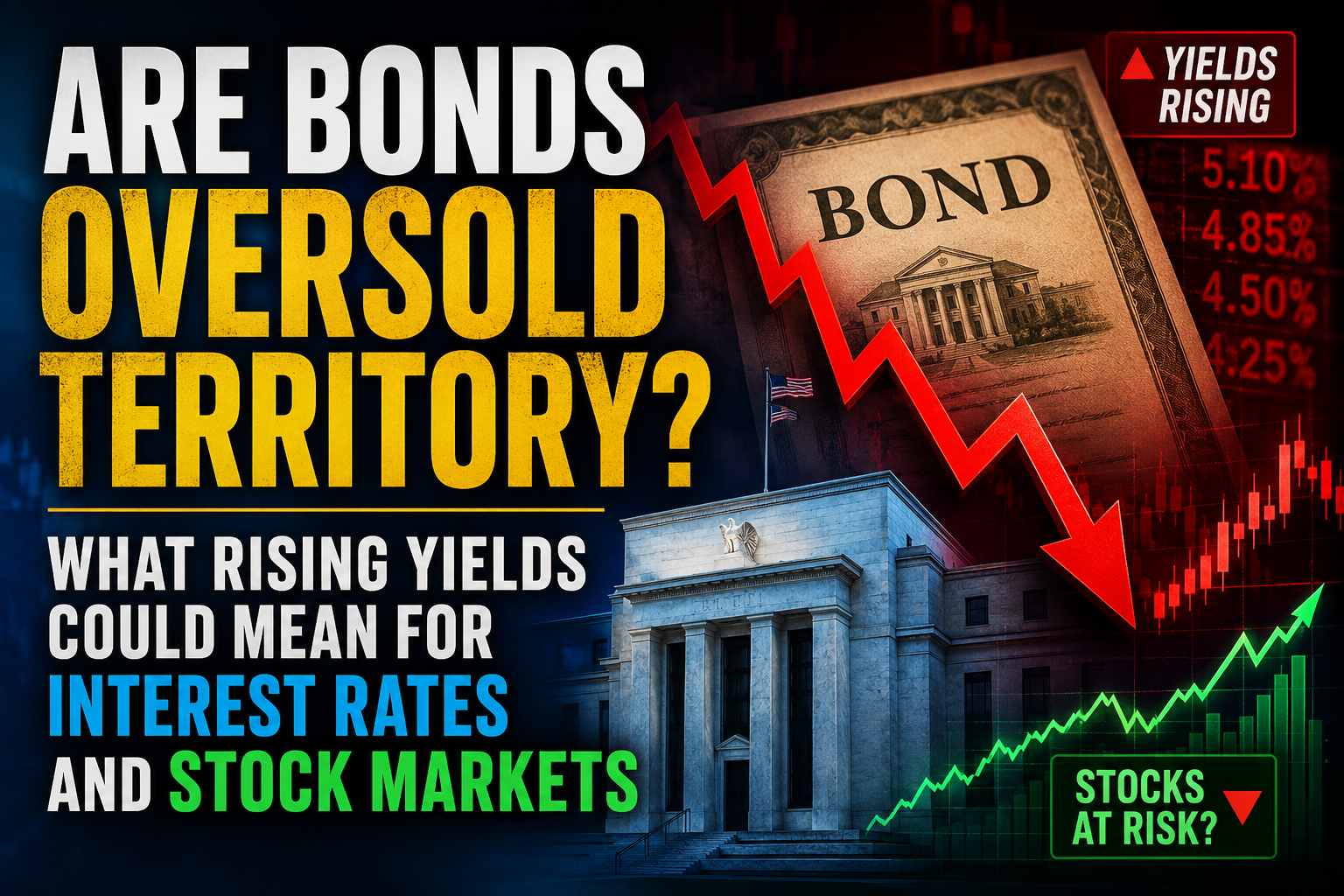
Are Bonds Entering Oversold Territory? What Rising Yields Could Mean for Interest Rates and Stock Markets


Government bond markets are approaching what many analysts describe as deeply oversold territory after one of the sharpest sell-offs in years. As bond prices fall, yields rise, and investors have become increasingly concerned that inflation and government borrowing will keep interest rates elevated for longer than previously expected.
In both the United States and the United Kingdom, long-term bond yields have climbed aggressively in recent months. The U.S. 30-year Treasury yield has pushed above 5%, while UK gilt yields have also surged. This rapid rise reflects growing fears that central banks may struggle to cut interest rates quickly if inflation remains stubbornly high.
However, when markets become excessively bearish, sharp reversals can occur. Many traders now believe bonds are technically oversold, meaning prices may have fallen too far too fast. If inflation data begins to cool or economic growth weakens, investors could rush back into bonds, causing yields to fall and prices to rebound.
Interest rates remain the key factor. Central banks such as the Federal Reserve and the Bank of England are attempting to balance inflation control with slowing economic growth. If economies weaken significantly, policymakers may eventually be forced to lower rates, which would likely benefit bond markets.
Stock prices could also be heavily affected by the next move in yields. Rising yields tend to pressure equities because borrowing becomes more expensive and future corporate profits are discounted more aggressively. Technology and growth stocks are particularly sensitive to higher bond yields.
On the other hand, if bond yields begin to stabilise or decline, equity markets may recover as investors regain confidence that interest rates have peaked. The coming months could therefore prove crucial for both bond and stock markets as investors search for signs that inflation and interest rates are finally beginning to ease.

Tradable assets:
Min.Deposit:
Max Leverage:
FCA:

Rating:
 Earnings Calendar
  Economic Calendar
  VAT Calculator
  Tax Free Childcare Calculator
 Percentage Calculator
 Compound Interest Calculator
  Loan Overpayment Calculator
 Mortgage Calculator
 Credit Card Calculator
 Investing
  Economics
 Trading
  Technical Analysis
  Personal Finance
 Calculator