News
Tesla Q3 Update and Its Impact on the Stock
04 Oct 2026, 10:00


Join Minipip Academy and access free courses in investing, trading, economics, and more.
Sign Up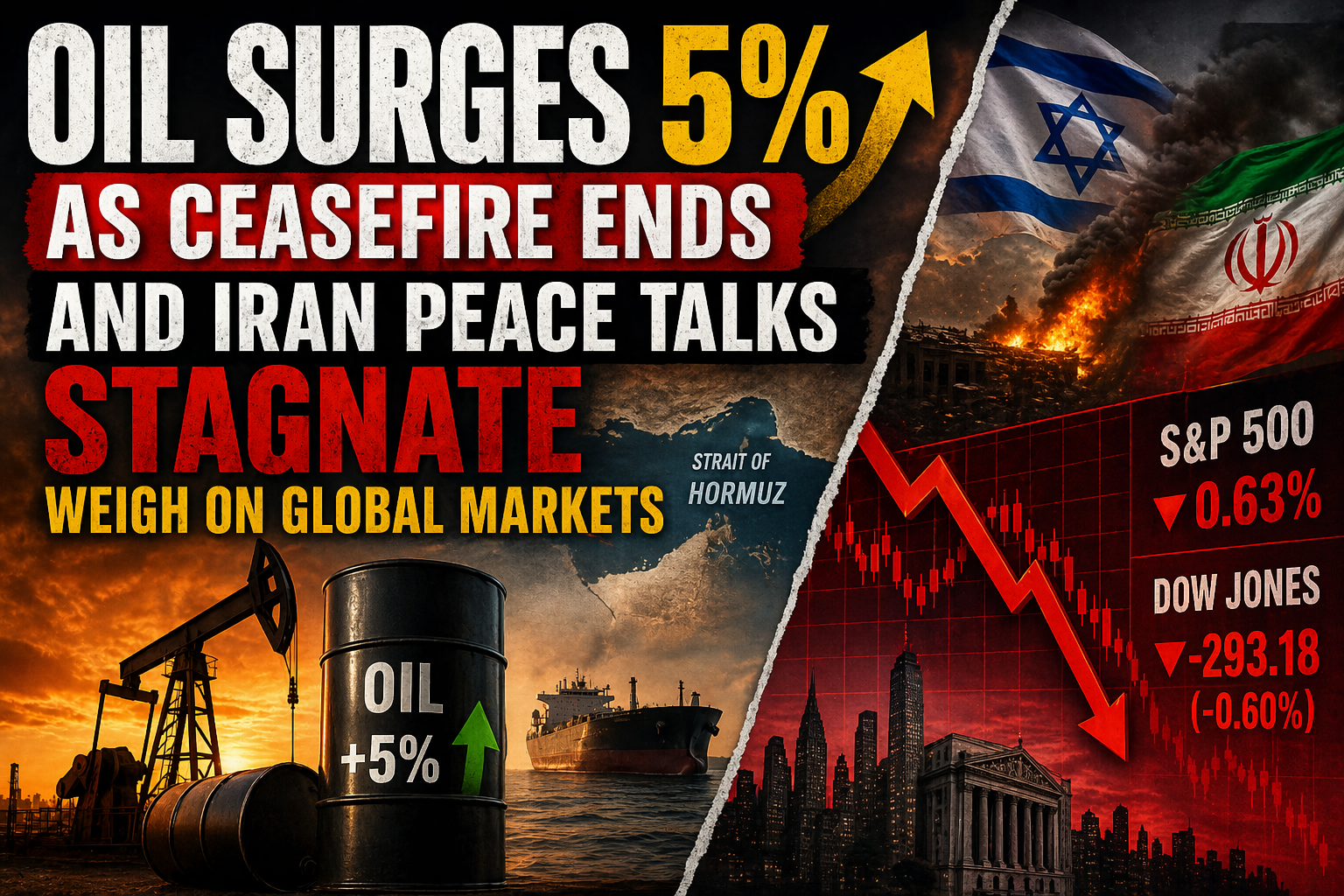
Oil Surges 5% as Ceasefire Ends and Iran Peace Talks Stagnate Weigh on Global Markets


Global markets turned sharply lower on Wednesday as geopolitical tensions in the Middle East intensified, with oil prices jumping around 5% while major U.S. stock indices slipped on renewed fears of supply disruption and stalled diplomacy. Crude oil prices rallied strongly after reports that a fragile ceasefire in the ongoing Middle East conflict had effectively broken down, while peace negotiations involving Iran showed little progress. Traders reacted quickly to the prospect of reduced oil supply through key shipping routes, particularly around the Strait of Hormuz, a critical chokepoint for global energy flows. The surge in energy prices reflected growing concerns that renewed hostilities could disrupt exports from the region, which accounts for a significant share of global oil production. As tensions escalated, Brent crude briefly spiked above recent trading ranges before stabilising at elevated levels, extending volatility that has defined energy markets in recent weeks. Equity markets, meanwhile, moved in the opposite direction. The S&P 500 fell 0.63%, as investors reduced exposure to risk assets amid rising geopolitical uncertainty and inflation concerns tied to higher energy costs. The index’s decline marked a broad-based selloff across sectors, with cyclical and growth stocks among the weakest performers. The Dow Jones Industrial Average dropped 293.18 points, or roughly 0.6%, reflecting investor caution as the prospect of prolonged instability weighed on sentiment. Industrial and financial stocks, which are particularly sensitive to macroeconomic shocks and rising input costs, contributed heavily to the decline. Market participants pointed to the breakdown in diplomatic momentum as a key driver of the move. Peace talks involving Iran, which had previously helped ease fears of energy supply shocks, have reportedly stalled, removing a key source of optimism for traders. The fading expectation of a durable agreement has reintroduced a “risk premium” into oil prices, amplifying market volatility. The divergence between energy and equity markets highlights the complex dynamics currently shaping global finance. Higher oil prices typically benefit energy producers but raise costs for consumers and businesses, increasing concerns that inflation could remain sticky. This, in turn, complicates the outlook for monetary policy and economic growth. Investors are also watching central bank responses closely. Persistent energy-driven inflation could limit the ability of policymakers to ease interest rates, keeping borrowing costs elevated for longer and further pressuring equity valuations. Overall, the latest moves underscore how sensitive markets remain to geopolitical developments. With ceasefire conditions weakening and diplomatic talks under strain, traders are bracing for continued volatility across both energy and equity markets in the near term. For now, oil markets are being driven less by fundamentals and more by headlines, while stock indices reflect growing caution as investors reassess the stability of global supply chains and the durability of economic growth.

Tradable assets:
Min.Deposit:
Max Leverage:
FCA:

Rating:
 Earnings Calendar
  Economic Calendar
  VAT Calculator
  Tax Free Childcare Calculator
 Percentage Calculator
 Compound Interest Calculator
  Loan Overpayment Calculator
 Mortgage Calculator
 Credit Card Calculator
 Investing
  Economics
 Trading
  Technical Analysis
  Personal Finance
 Calculator