News
Tesla Q3 Update and Its Impact on the Stock
04 Oct 2026, 10:00


Join Minipip Academy and access free courses in investing, trading, economics, and more.
Sign Up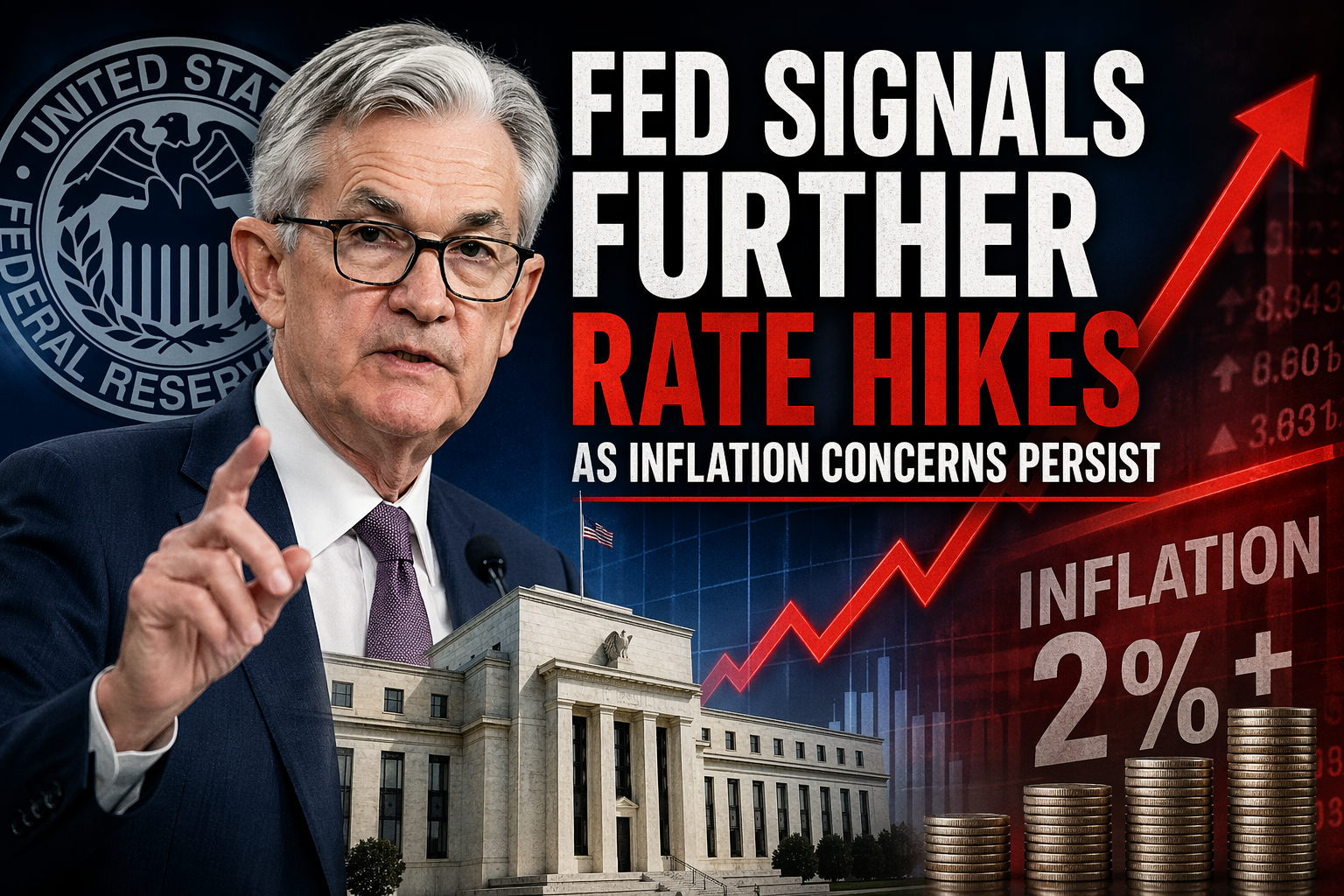
Fed Signals Further Rate Hikes as Inflation Concerns Persist


The Federal Reserve has signalled that further interest rate hikes remain on the table, reinforcing its commitment to bringing inflation back under control despite growing concerns over economic slowdown. Recent comments from policymakers suggest that while progress has been made, inflationary pressures continue to run above the central bank’s long-term target, prompting a more cautious and hawkish stance. At the heart of the issue is inflation, which, although easing from its peak, remains stubbornly above the Fed’s 2% goal. Key indicators such as core inflation and wage growth continue to show resilience, suggesting that underlying price pressures have not fully dissipated. This has led officials to emphasise that monetary policy may need to remain restrictive for longer than markets initially anticipated. Speaking on recent developments, Jerome Powell reiterated that the Fed is prepared to take additional action if necessary. He noted that while the economy has shown signs of cooling, particularly in sectors sensitive to borrowing costs, overall demand remains relatively strong. This resilience, while positive for growth, risks prolonging inflation if not carefully managed. Financial markets reacted swiftly to the renewed hawkish tone. Bond yields edged higher, reflecting expectations of tighter monetary policy, while equity markets experienced volatility as investors reassessed the likelihood of further rate increases. Growth-oriented sectors, particularly technology stocks, were among the most sensitive to these shifts, given their reliance on lower discount rates for valuation. The Fed’s approach highlights the delicate balancing act it faces: tightening policy enough to curb inflation without tipping the economy into a recession. Higher interest rates increase borrowing costs for consumers and businesses, which can slow spending and investment. However, an overly aggressive approach risks dampening economic activity too sharply, potentially leading to job losses and reduced output. Recent economic data presents a mixed picture. While job growth has remained robust and unemployment rates low, there are early signs of softening in consumer spending and business investment. Housing markets, in particular, have felt the impact of higher mortgage rates, with demand cooling in response to affordability pressures. Globally, the Fed’s stance also carries significant implications. As the world’s largest economy, US monetary policy influences capital flows, exchange rates, and financial conditions worldwide. Emerging markets, in particular, often face increased pressure when US rates rise, as investors shift capital toward higher-yielding dollar-denominated assets. Looking ahead, the path of interest rates will likely depend on incoming economic data. Inflation readings, labour market trends, and consumer spending patterns will all play a critical role in shaping the Fed’s next moves. Policymakers have made it clear that they are data-dependent, leaving the door open to further tightening if inflation proves more persistent than expected. For now, the message from the Federal Reserve is clear: the fight against inflation is not yet over. While the pace of rate hikes may slow, the possibility of additional increases underscores the central bank’s determination to restore price stability, even as it navigates the risks of slowing economic growth.

Tradable assets:
Min.Deposit:
Max Leverage:
FCA:

Rating:
 Earnings Calendar
  Economic Calendar
  VAT Calculator
  Tax Free Childcare Calculator
 Percentage Calculator
 Compound Interest Calculator
  Loan Overpayment Calculator
 Mortgage Calculator
 Credit Card Calculator
 Investing
  Economics
 Trading
  Technical Analysis
  Personal Finance
 Calculator