News
What Labour’s Leaked Plans Could Mean for Your Money
10 Oct 2026, 12:26


Join Minipip Academy and access free courses in investing, trading, economics, and more.
Sign Up
Unsplash.com


The 30-year U.S. Treasury yield has climbed to 5.13%, the highest level since 2007
Oil is trading above $100, and global inflation has ticked up
A new Fed chair is pending, adding policy uncertainty
U.S. indices have rallied roughly 18% in six weeks
Nvidia reports earnings this Wednesday, and USD/JPY is back at 1.60
Taken together, these conditions make the market more vulnerable to a short-term flush or profit-taking spell, especially if rising oil and bond yields feed inflation concerns and rate uncertainty. However, exceptionally strong Q1 earnings and a robust profit outlook for the rest of 2026 significantly cushion the downside.
Oil prices above $100 can reignite inflation worries and pressure corporate margins, especially in consumer-facing and transport-heavy sectors. This tends to dampen risk appetite and can trigger volatility across equities.
Markets generally dislike unclear monetary policy leadership, particularly at a sensitive macro point. A new Fed chair incoming means investors are watching for shifts in rate guidance, which can lead to rapid re-pricing in both bonds and stocks.
An 18% rally in just six weeks often leads to:
Crowded positioning in equities
Stretched sentiment that can unwind quickly
Increased likelihood of short-term profit-taking when a macro shock hits
The key driver of a potential pullback is not the headline level of oil or yields alone, but whether they are rising while:
Growth expectations are weakening
Policy uncertainty is increasing
This combination is more likely to trigger a meaningful correction than a simple “high prices = selloff” rule.
The mid-year timing by itself is not a strong standalone signal. However, markets often reassess positioning around:
Earnings trends
Macro data releases
Policy expectations
If the recent rally has already priced in strong fundamentals, even a modest disappointment can trigger a fast unwind.
The earnings backdrop dramatically changes the risk equation.
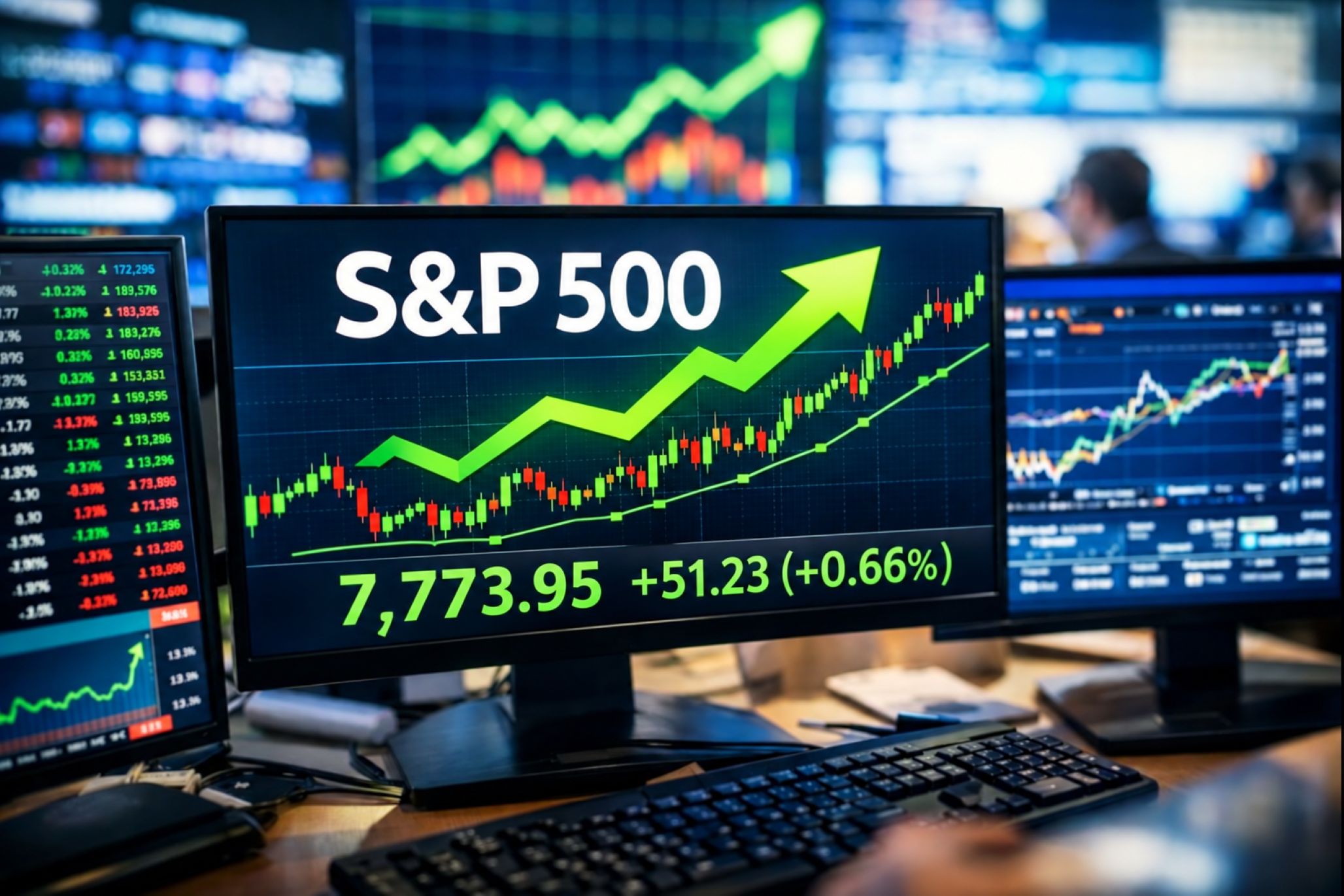
S&P 500 Q1 earnings are on track to rise ~28%, the strongest growth since Q4 2021
Median earnings surprises are at a four-year high
9 of 11 sectors are on track for higher earnings
Forecasts for the rest of 2026 are also rising
This profit strength has been the main driver of the 18% rally, not just valuation expansion.
Companies have shown they can adapt to higher energy prices and still deliver robust profits
Strong earnings support higher valuations even when rates are elevated
The “bad yield rise” scenario (inflation stress + weaker growth) is less likely to dominate if earnings keep beating by wide margins
Given the earnings momentum and AI-driven profit surge:
The setup is more consistent with profit-taking pauses or shallow pullbacks (3–5%) rather than a deep, structure-breaking flush
Strong earnings make a hard sell-off unlikely unless the macro shock is severe (e.g., oil spikes much higher, or policy uncertainty escalates into a real geopolitical or policy crisis)
The base case tilts toward consolidation with upside bias, not a major top, as long as the profit trend continues
A more pronounced 3–7% retracement becomes more plausible if:
Risk assets keep rising while oil, yields, and policy uncertainty stay elevated
Inflation data surprises to the upside
Nvidia’s earnings (Wednesday) or other key tech results disappoint
The market interprets the Fed chair transition as a shift toward a more restrictive policy path
Expect volatility, not necessarily a crash.
The earnings backdrop cushions the downside but does not eliminate short-term swings around oil, yields, and the Fed transition.
Watch the interaction of macro and fundamentals.
A pullback is more likely if rising yields and oil coincide with any sign of slowing earnings momentum.
Use shallow pullbacks as potential entry points if the profit trend holds.
If Q2 and forward estimates continue to beat, corrections may be bought into quickly.
Be mindful of key catalysts.
Nvidia earnings this Wednesday
Upcoming inflation and jobs data
Any signals from the incoming Fed chair about the rate path
The market is in a high-volatility, high-reward equilibrium: macro risks are elevated, but earnings strength is historically robust. The more likely outcome is short-term digesting and shallow pullbacks, not a major top, as long as corporate profits continue to outperform expectations.
For now, the earnings story cushions the downside and makes the rally’s slope more sustainable, even as oil, bond yields, and Fed uncertainty keep the market on edge.
Disclaimer: This information is not to be interpretated as financial advice of any type.

Tradable assets:
Min.Deposit:
Max Leverage:
FCA:

Rating:
 Earnings Calendar
  Economic Calendar
  VAT Calculator
  Tax Free Childcare Calculator
 Percentage Calculator
 Compound Interest Calculator
  Loan Overpayment Calculator
 Mortgage Calculator
 Credit Card Calculator
 Investing
  Economics
 Trading
  Technical Analysis
  Personal Finance
 Calculator