News
What Labour’s Leaked Plans Could Mean for Your Money
10 Oct 2026, 12:26


Join Minipip Academy and access free courses in investing, trading, economics, and more.
Sign Up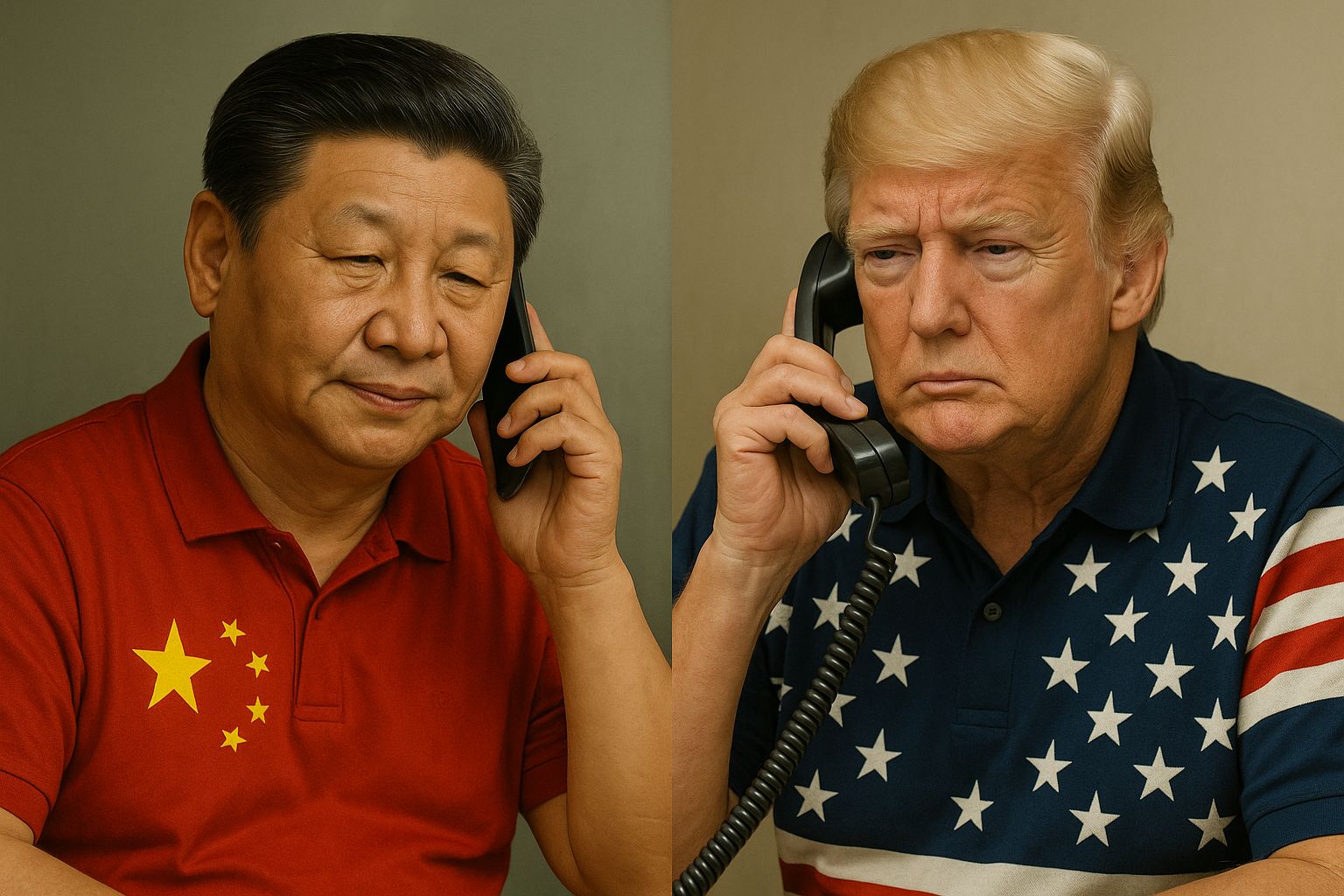
AI


Trade Stability, Rare Earth Supplies and Taiwan Tensions Likely to Dominate Key Meeting
Investors and global markets are closely watching this week’s summit in Beijing between US President Donald Trump and Chinese President Xi Jinping. Analysts believe the meeting is more likely to deliver stability than major breakthroughs, as both countries attempt to maintain a fragile trade truce.
The summit comes at a time of slowing global economic growth, rising geopolitical tensions and increasing concerns about supply chains, tariffs and energy security.
According to analysts at Wolfe Research, the meeting is expected to reinforce improving diplomatic relations rather than produce major new agreements.
Both the United States and China are seen as wanting to avoid further escalation after years of trade disputes, technology restrictions and economic pressure.
Potential outcomes from the summit could include:
Rare earth materials are expected to be one of the most important topics discussed. China controls a large share of global rare earth processing, which is critical for electric vehicles, semiconductors, defence equipment and renewable energy technology.
Analysts believe the US is likely to push for more stable access to these materials as competition in advanced technology intensifies.
Taiwan is also expected to remain a sensitive issue during discussions. However, experts do not expect any major policy announcements or changes from either side.
Iran and Middle East tensions could also feature heavily during the summit. China relies heavily on oil imports from the region and has strong economic reasons to support stability in the Strait of Hormuz, one of the world’s most important shipping routes for crude oil.
Yardeni Research said that for financial markets, “no news may be good news”, suggesting that a calm and constructive meeting alone could help reduce investor anxiety.
Additional market concerns surrounding the summit include:
US-China trade exceeded hundreds of billions of dollars annually before trade tensions escalated in recent years. Many global companies continue to depend on both countries for manufacturing, technology and consumer demand.
Technology firms, industrial manufacturers, luxury brands and commodity producers are all likely to be affected by the tone and outcome of the summit.
Conclusion for Investors
For investors, the Beijing summit may be more important for what it avoids than what it delivers. Reduced tensions between the world’s two largest economies could support global stock markets, ease pressure on supply chains and improve business confidence.
Sectors that may benefit from greater stability include semiconductors, industrials, agriculture, luxury goods and energy. However, ongoing risks surrounding Taiwan, technology restrictions and geopolitical conflict remain significant.
Investors should continue monitoring developments closely, as even modest improvements in US-China relations could have major implications for global markets, inflation and international trade over the coming years.
Sources: (Investing.com, Reuters.com)

Tradable assets:
Min.Deposit:
Max Leverage:
FCA:

Rating:
 Earnings Calendar
  Economic Calendar
  VAT Calculator
  Tax Free Childcare Calculator
 Percentage Calculator
 Compound Interest Calculator
  Loan Overpayment Calculator
 Mortgage Calculator
 Credit Card Calculator
 Investing
  Economics
 Trading
  Technical Analysis
  Personal Finance
 Calculator