Analysis
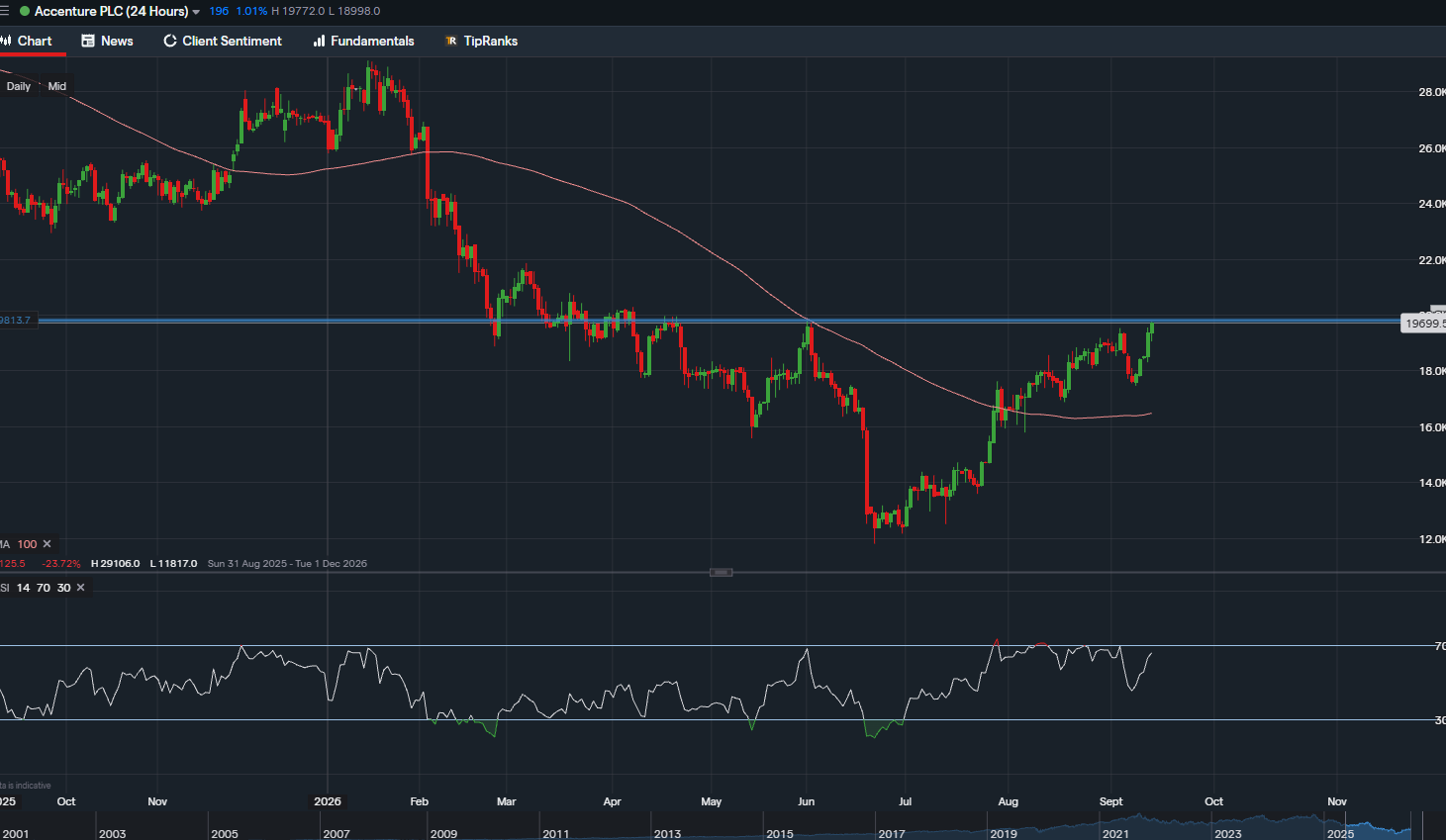
Accenture Tests Key Resistance as Earnings Loom
$197
15 Sep 2026, 18:47
Neutral


Join Minipip Academy and access free courses in investing, trading, economics, and more.
Sign Up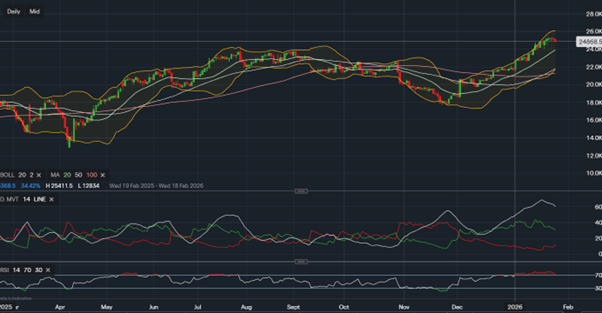
Boeing Stock Analysis: Bullish Rally, Earnings Outlook, and Long-Term Risks


After a strong bullish rally that began on Friday 21 November, Boeing’s share price surged as investors responded positively to improving aircraft delivery numbers and growing expectations that this momentum would continue into 2026. These developments were widely interpreted as signs that the company may be turning a corner after previous setbacks, further fuelled by investor optimism ahead of Boeing’s earnings report scheduled for 27 January 2026.
However, despite the rally, forecasted negative earnings per share (EPS) raise an important question: could longer-term investors be deterred by Boeing’s ongoing profitability challenges?
Technical Analysis: Signs of a Potential Reversal
From a technical perspective, Boeing’s strong bullish trend now appears to be losing momentum.
As a result, the ADX has declined to 62, with DI+ converging towards DI-, indicating weakening bullish pressure. This emerging selling pressure can likely be explained by profit-taking and investor caution ahead of the upcoming earnings announcement, as traders seek to reduce exposure to uncertain outcomes.
Earnings Forecasts: Improvement, but Still Negative
Analyst forecasts suggest improving earnings, but they also highlight lingering concerns. According to estimates from eight analysts, Boeing’s EPS is expected to improve by 93.22%, rising from −$5.90 last year to −$0.40 this year.
While this marks a significant improvement, EPS is still forecast to remain negative. In the short term, this could be interpreted positively, as Boeing’s share price has increased by 42.26% over the past year, suggesting the stock may be undervalued relative to the pace of earnings recovery.
However, from a longer-term perspective, persistent negative EPS can create structural challenges, including:
These factors may discourage long-term investors, even if short-term earnings trends appear to be improving.
Fundamental Analysis: Valuation Concerns Remain
Boeing’s fundamentals reflect similar concerns. The absence of a trailing P/E ratio indicates that the company is still loss-making. At the same time, a forward P/E of 117.65 suggests analysts expect Boeing to return to profitability, but with earnings that remain small relative to the current share price.
This combination implies that, despite optimism around recovery, the stock may be priced aggressively, leaving little margin for error if earnings disappoint or operational issues persist.
Outlook for Traders and Investors
Short-term outlook:
Boeing’s improving earnings forecasts and strong delivery momentum could support short-term trading opportunities, particularly given signs of relative undervaluation and heightened investor interest around earnings.
Long-term outlook:
Despite these positives, continued negative EPS and valuation concerns may deter longer-term investors who are focused on sustainable profitability and long-term growth potential. Confidence in Boeing’s ability to fully recover and expand will likely depend on its success in delivering consistent positive earnings in the years ahead.

Tradable assets:
Min.Deposit:
Max Leverage:
FCA:

Rating:
 Earnings Calendar
  Economic Calendar
  VAT Calculator
  Tax Free Childcare Calculator
 Percentage Calculator
 Compound Interest Calculator
  Loan Overpayment Calculator
 Mortgage Calculator
 Credit Card Calculator
 Investing
  Economics
 Trading
  Technical Analysis
  Personal Finance
 Calculator