Analysis
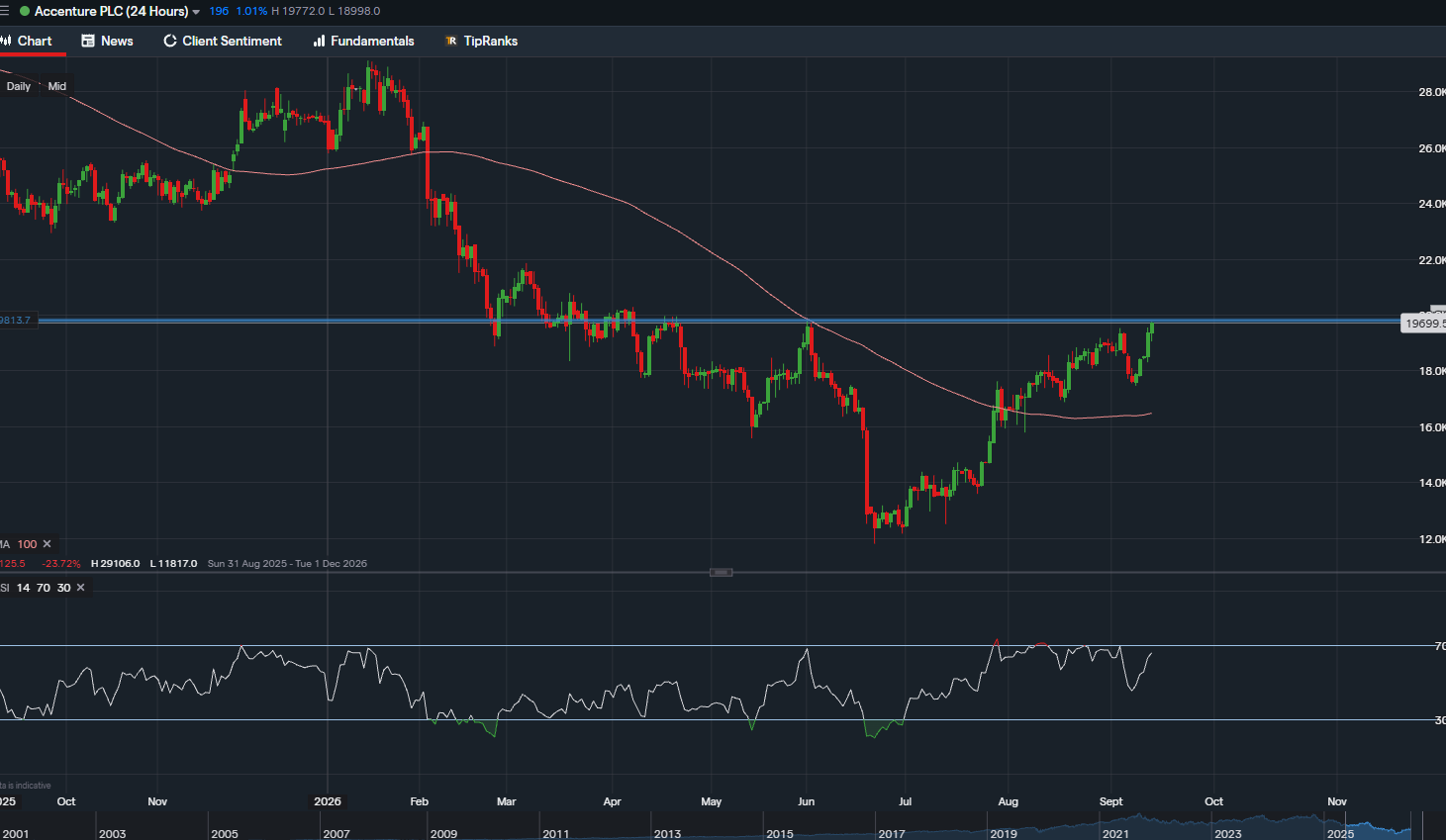
Accenture Tests Key Resistance as Earnings Loom
$197
15 Sep 2026, 18:47
Neutral


Join Minipip Academy and access free courses in investing, trading, economics, and more.
Sign Up
Pexels.com


Why trade uncertainty may support EUR/USD – and what it means for investors
Renewed political tensions between the United States and Europe, triggered by disputes linked to Greenland and trade policy, have put the spotlight back on the euro. While the risks to European economic growth are real, currency markets are responding in a more complex way, with signs that escalation could actually support the euro against the US dollar.
Trade Tensions Return, but Tariffs Paused
The immediate threat of a new 10% US tariff on imports from eight European countries has eased after Washington withdrew the proposal amid signs of a potential deal.
However, the episode has reminded investors that trade and political uncertainty is back on the agenda. Even without tariffs in place, markets are now pricing in a higher risk of renewed escalation, which can influence currencies, equities and bond markets.
Why Escalation Can Support the Euro
According to analysts at Bank of America, the euro-dollar exchange rate sits at the centre of two opposing forces.
On one hand, any escalation in US–Europe relations threatens European growth. Slower growth would normally weaken the euro, particularly if it reduces exports and business investment.
On the other hand, Europe plays a critical role in financing the US current account deficit. When political or trade tensions rise, global investors may become less willing to fund US deficits, which can weaken the dollar instead.
Recent market moves suggest this second effect has been more influential.
What Recent Market Moves Tell Us
During the latest escalation scare:
Bank of America notes that while the reaction was milder than during the tariff shock of April 2025, the direction was consistent. Historically, the euro has often risen following surprise tariff escalation involving the EU.
The bank estimates that, on average, the euro has gained around 1% above trend in the week following similar events.
Why the Economic Damage May Be Limited
If tariffs were reintroduced but limited to the eight countries originally targeted, the overall economic impact on Europe would likely be contained.
Those countries account for roughly 11% of US imports, and most sit within the EU single market. This allows trade flows to adjust, softening the immediate hit.
The bigger risk is not tariffs themselves, but persistent uncertainty. Prolonged political tension can delay investment decisions, weigh on business confidence and gradually slow European growth.
Medium-Term Factors Supporting the Euro
Beyond trade headlines, broader structural trends are also influencing the euro:
Notably, higher US real interest rates are no longer translating into a stronger dollar against the euro in the way they once did, suggesting a change in market dynamics.
A coordinated EU response to US pressure, particularly focused on services rather than goods, could further support the euro if escalation remains contained.
What This Means for Investing Strategies
For investors, US–Europe tensions have several important implications:
Outlook: Uncertainty, but Not Panic
While a full-scale trade conflict would be negative for growth on both sides of the Atlantic, current market behaviour suggests investors are more focused on capital flows and funding risks than on tariffs alone.
As long as escalation remains limited, the euro could continue to find support during periods of US–Europe tension. For investors, the key will be managing currency risk and staying alert to how political developments feed through into markets.
Sources: (Investing.com, Reuters.com)

Tradable assets:
Min.Deposit:
Max Leverage:
FCA:

Rating:
 Earnings Calendar
  Economic Calendar
  VAT Calculator
  Tax Free Childcare Calculator
 Percentage Calculator
 Compound Interest Calculator
  Loan Overpayment Calculator
 Mortgage Calculator
 Credit Card Calculator
 Investing
  Economics
 Trading
  Technical Analysis
  Personal Finance
 Calculator