News
Tesla Q3 Update and Its Impact on the Stock
04 Oct 2026, 10:00


Join Minipip Academy and access free courses in investing, trading, economics, and more.
Sign Up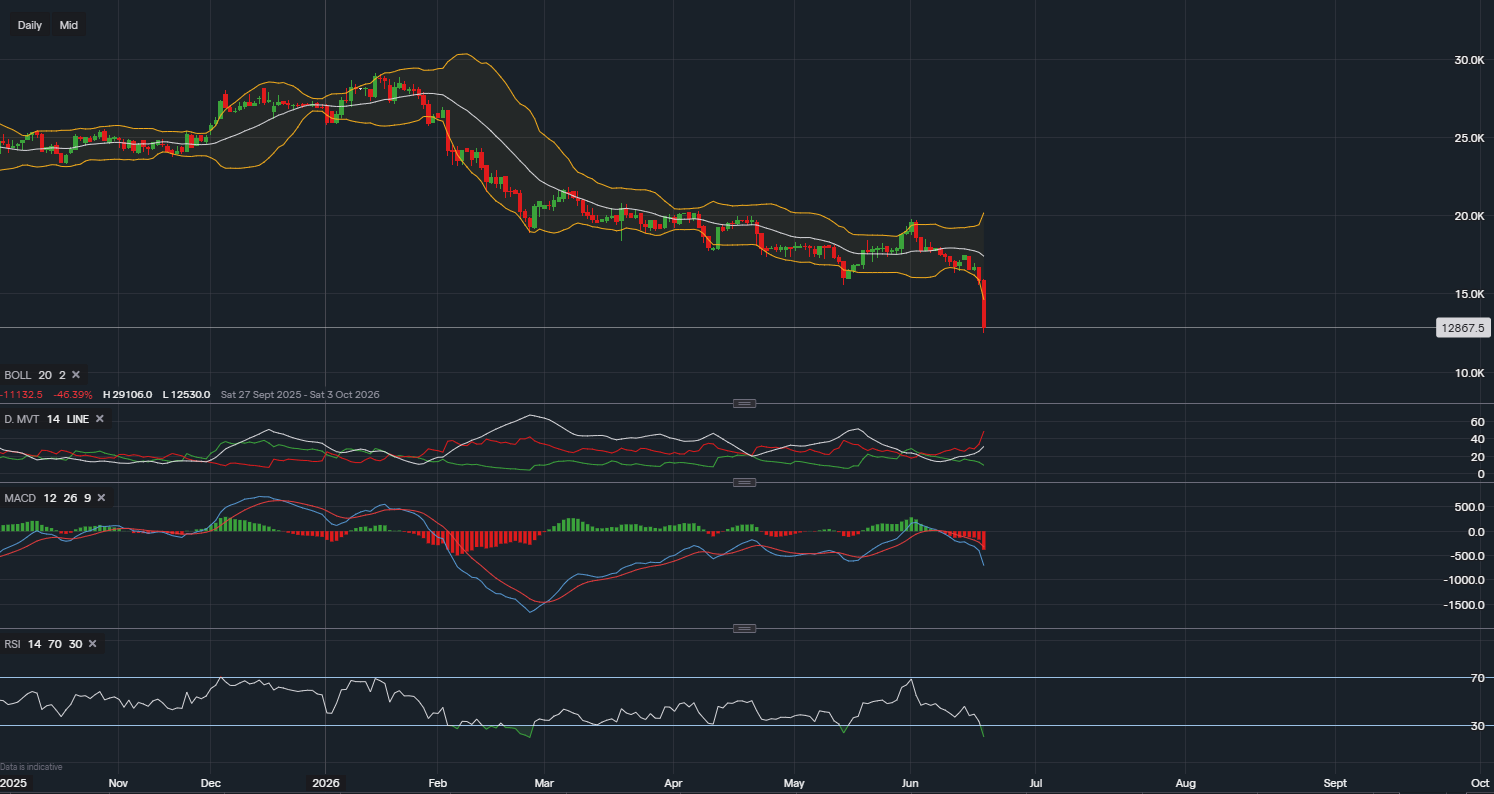
Accenture Stock Falls After Earnings: Is ACN Oversold or Still at Risk?


Accenture Stock Analysis: Is ACN Oversold After Its Earnings Sell-Off?
Accenture shares fell sharply following its earnings report on Thursday 18 June, pushing the stock into oversold territory on the RSI indicator. The move has raised an important question for traders and investors: is Accenture’s downward trend likely to continue, or could a reversal now be forming?
Accenture Earnings Report
Looking first at the earnings report, Accenture delivered solid results, with revenue rising to $18.72 billion and earnings per share increasing to $3.80. However, investors reacted negatively because the company lowered its full-year revenue growth guidance from 3%–5% to 3%–4%. New bookings also fell slightly, suggesting demand may be slowing. Despite this, Accenture remains profitable, continues to return cash to shareholders, and still has long-term growth opportunities in artificial intelligence, cybersecurity and digital transformation.
Accenture Technical Analysis
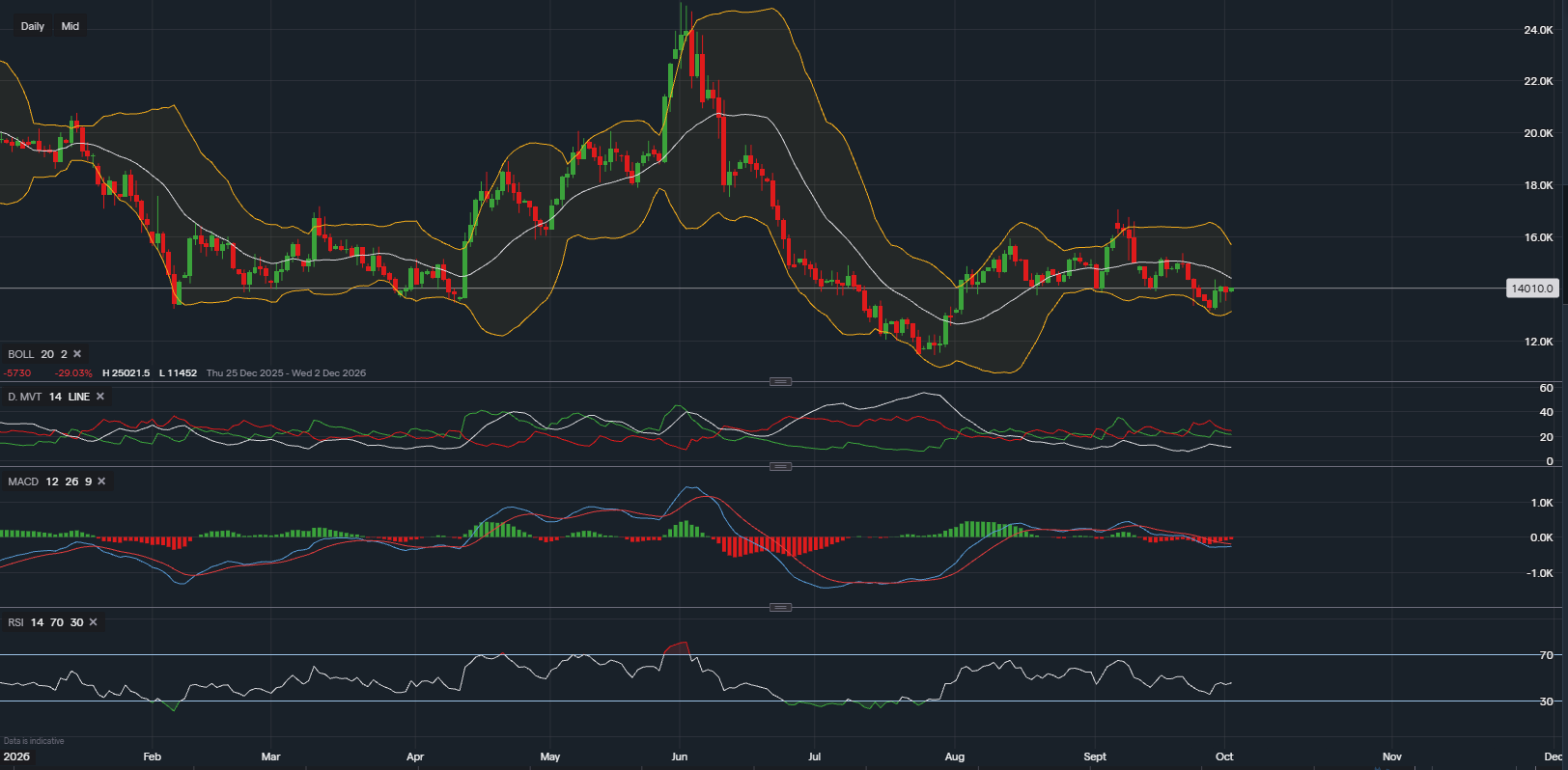
Looking next technically, the recent fall in price has pushed Accenture shares below the lower Bollinger Band. This can sometimes suggest that a stock has moved too far too quickly, especially when combined with an oversold RSI reading.
The RSI moving into oversold territory may indicate that selling pressure has become stretched in the short term. For traders, this can sometimes create the conditions for a relief bounce or short-term reversal. However, an oversold RSI on its own is not enough to confirm that the downtrend has ended.
At this stage, traders may want to watch for confirmation from other indicators, including the MACD and Directional Movement Index. If the MACD begins to turn upwards or crosses back above the signal line, this could suggest improving momentum. Similarly, if the Directional Movement Index shows weakening bearish pressure, this may support the case for a potential reversal.
However, if the price fails to reclaim the lower Bollinger Band and continues to make lower lows, the bearish trend may remain in control. In that case, the stock could continue to face selling pressure, particularly if investors remain concerned about Accenture’s weaker growth outlook.
Accenture Fundamental Analysis
Looking next fundamentally, Accenture appears to be trading at a much lower valuation than usual following the sharp decline. With a P/E ratio of around 10.22 and a forward P/E of around 8.66, the stock looks good value for money.
These ratios also suggest potential upside based on valuation. Using the current valuation, possible price targets sit around $140.27 on the lower side, representing approximately 9.01% upside, and $151.86 on the higher side, representing around 18.01% upside.
This is also supported by analyst forecasts, with the average price target sitting around $226.98. If achieved, this would represent a potential upside of around 76.39% from current levels. This suggests that analysts still see meaningful long-term value in Accenture, despite the recent weakness in the share price.
However, investors should be careful not to focus only on valuation. A low P/E ratio can indicate that a stock is undervalued, but it can also reflect concerns about future growth. In Accenture’s case, the market appears to be pricing in slower corporate spending, weaker bookings growth and uncertainty around the timing of an AI-led recovery.
Outlook for Traders and Investors
For traders, Accenture may be worth watching closely after the sharp fall in price. The stock now looks oversold, which could create the chance of a short-term bounce. However, traders should wait for clearer confirmation from indicators such as the MACD, RSI and price action before assuming a reversal has started.
For longer-term investors, Accenture still appears to be a strong business with exposure to artificial intelligence, cybersecurity and digital transformation. However, the weaker growth guidance and slight drop in new bookings suggest that demand may be slowing. Overall, the stock could offer value after the sell-off, but investors should be aware that short-term weakness may continue until confidence improves.

Tradable assets:
Min.Deposit:
Max Leverage:
FCA:

Rating:
 Earnings Calendar
  Economic Calendar
  VAT Calculator
  Tax Free Childcare Calculator
 Percentage Calculator
 Compound Interest Calculator
  Loan Overpayment Calculator
 Mortgage Calculator
 Credit Card Calculator
 Investing
  Economics
 Trading
  Technical Analysis
  Personal Finance
 Calculator