News
News in Brief
21 Sep 2026, 16:23


Join Minipip Academy and access free courses in investing, trading, economics, and more.
Sign Up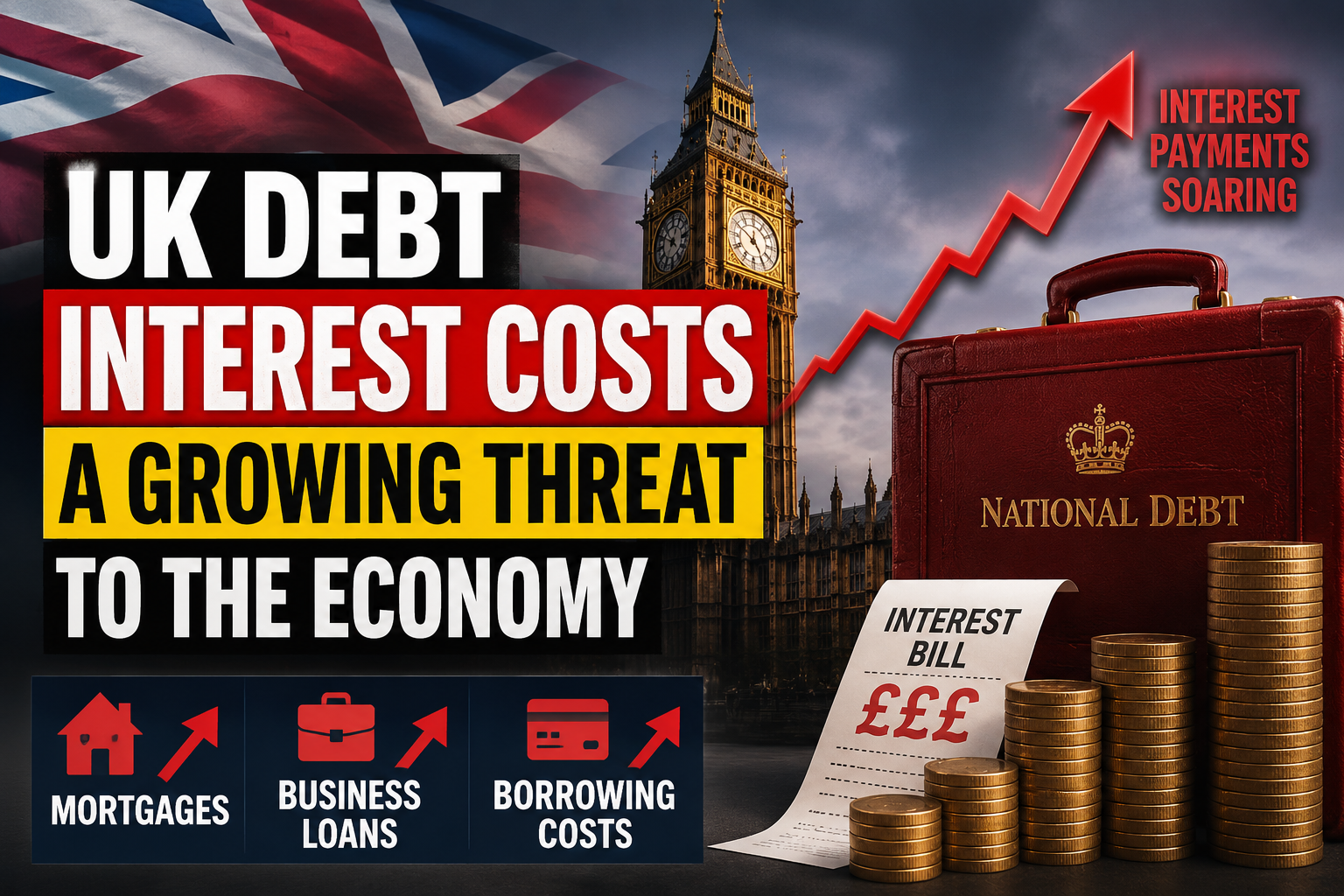
UK Debt Interest Costs Become a Growing Threat to the Economy


The UK government is spending billions of pounds every year simply to cover the interest on its national debt, raising fresh concerns about the pressure facing the public finances.
As borrowing has risen in recent years, debt interest payments have become one of the largest costs for the Treasury. This matters because the more a government owes, the more closely investors watch its ability to repay. When confidence weakens, investors can demand higher interest rates to lend money, pushing up the cost of government borrowing.
Those higher borrowing costs do not stay confined to Westminster. Government bond yields help influence interest rates across the wider economy, including mortgages, business loans and other forms of credit. If investors require a higher return to hold UK debt, borrowing can become more expensive for households and companies too.
That creates a difficult challenge for the government. More money spent on debt interest means less room for public services, investment or tax cuts. To keep borrowing under control, ministers may be forced to either reduce spending or increase taxes. Both options can weigh on economic growth, especially at a time when living costs and business costs remain under pressure.
This is why financial markets pay such close attention to the UK’s debt levels and fiscal plans. A loss of confidence can have real consequences, as higher debt costs can feed through into the wider economy and slow activity.
The central concern is not simply that the UK has debt, but that servicing it is becoming increasingly expensive. If interest payments continue to rise, the government will face tougher choices over how to fund public services while maintaining market confidence.
For households and businesses, the issue may seem distant, but it can affect everyday financial decisions. When the cost of government borrowing rises, the cost of borrowing across the economy can rise with it — making debt management a key test for the UK economy.
The stock market can also be affected. When government borrowing costs rise, investors may become more cautious about UK assets, especially if they believe higher taxes, lower public spending or slower growth could hurt company profits. Higher bond yields can also make shares look less attractive, because investors can earn stronger returns from lower-risk government debt. As a result, periods of concern over UK debt can put pressure on share prices, particularly for banks, housebuilders, retailers and other companies closely tied to the domestic economy.

Tradable assets:
Min.Deposit:
Max Leverage:
FCA:

Rating:
 Earnings Calendar
  Economic Calendar
  VAT Calculator
  Tax Free Childcare Calculator
 Percentage Calculator
 Compound Interest Calculator
  Loan Overpayment Calculator
 Mortgage Calculator
 Credit Card Calculator
 Investing
  Economics
 Trading
  Technical Analysis
  Personal Finance
 Calculator