News
News in Brief
21 Sep 2026, 16:23


Join Minipip Academy and access free courses in investing, trading, economics, and more.
Sign Up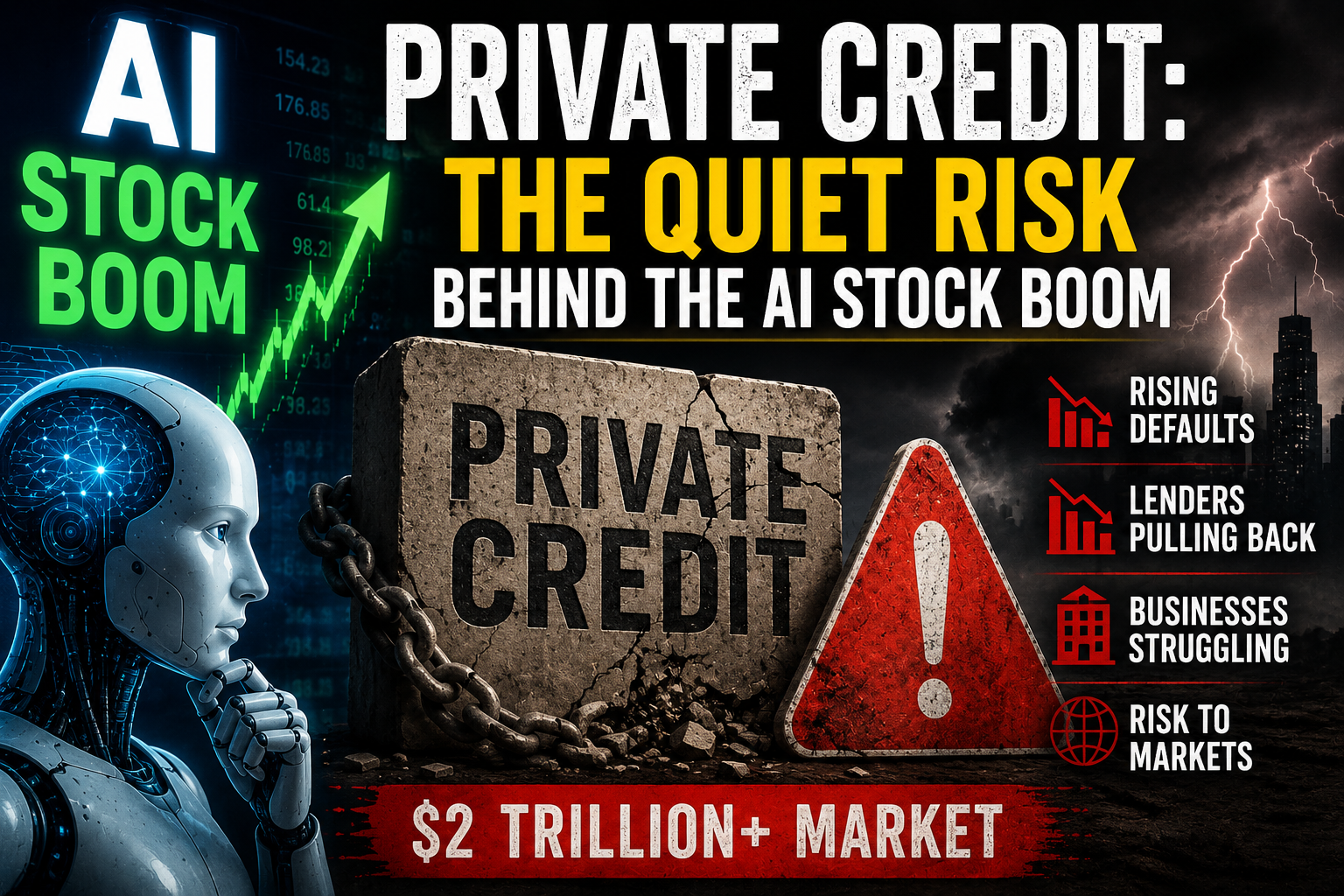
Private Credit: The Quiet Risk Building Behind the AI Stock Boom


While investors remain focused on the surge in artificial intelligence stocks, another financial risk is quietly building in the background: private credit.
Private credit is a fast-growing part of the financial system where large investment firms lend money directly to companies, rather than those businesses borrowing from traditional banks. The sector expanded rapidly during the long period of low interest rates, as investors searched for higher returns and companies looked for alternative sources of funding.
Today, the market is worth more than two trillion dollars globally. But the environment has changed. Interest rates are now much higher than they were during the years of cheap money, and some companies are finding it harder to keep up with their repayments.
That has raised concerns that defaults could continue to rise. If more borrowers fail to repay their loans, private credit funds and their investors may become more cautious. Lenders could pull back, making it harder for businesses to refinance existing debt or secure new funding.
The concern for markets is that stress in private credit may not remain isolated. If companies face higher borrowing costs, weaker cash flow or reduced access to finance, that pressure could eventually feed into the wider economy and stock market.
Analysts are not saying private credit represents another 2008-style banking crisis. The structure of the market is different, and much of the lending sits outside the traditional banking system. However, that is also part of the concern: because private credit is less visible than public markets, problems can be harder to spot early.
For now, AI stocks may be dominating investor attention. But private credit is becoming a growing warning sign for financial markets — and one that could matter much more if defaults keep rising.

Tradable assets:
Min.Deposit:
Max Leverage:
FCA:

Rating:
 Earnings Calendar
  Economic Calendar
  VAT Calculator
  Tax Free Childcare Calculator
 Percentage Calculator
 Compound Interest Calculator
  Loan Overpayment Calculator
 Mortgage Calculator
 Credit Card Calculator
 Investing
  Economics
 Trading
  Technical Analysis
  Personal Finance
 Calculator