News
What Labour’s Leaked Plans Could Mean for Your Money
10 Oct 2026, 12:26


Join Minipip Academy and access free courses in investing, trading, economics, and more.
Sign Up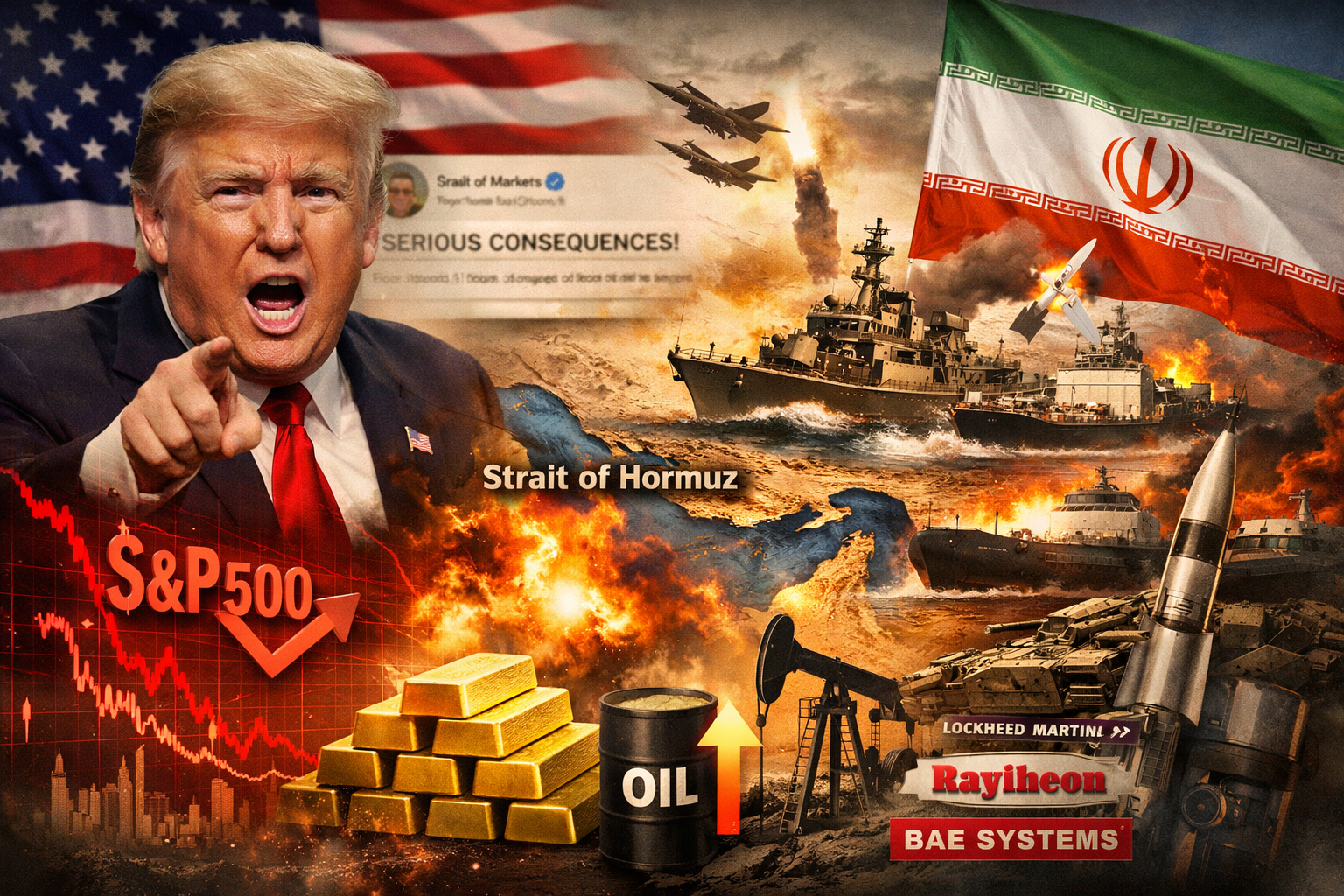
Escalating Iran Tensions Rattle Markets as Prolonged Conflict Fears Grow


Recent developments in the Iran crisis are becoming more concrete—and more concerning for markets—than earlier, more speculative phases of the conflict.
Over the past week, a series of pointed social media posts from Donald Trump have signalled a shift toward a more confrontational stance. In these messages, he has warned of “serious consequences” if Iran continues its current actions, while also criticising prior negotiation efforts as ineffective. The tone marks a departure from earlier ambiguity and has been interpreted by markets as reducing the likelihood of a near-term diplomatic breakthrough.
At the same time, talks mediated by regional and European intermediaries have reportedly stalled. Negotiations aimed at de-escalating maritime tensions and limiting military posturing have failed to produce agreements, with key sticking points including sanctions relief and security guarantees. The absence of progress has reinforced the perception that neither side is willing to compromise in the short term.
Compounding this, there has been a noticeable tightening of maritime controls in strategic waterways linked to Iran. Increased inspections, delays, and selective blockades of commercial vessels—particularly those suspected of carrying energy or dual-use goods—are beginning to disrupt normal shipping flows. Insurance premiums for tankers operating in the Strait of Hormuz have risen, and some carriers are already rerouting or pausing operations altogether.
Taken together, these developments suggest a shift from a contained geopolitical flare-up to a more sustained standoff. For investors, the concern is no longer just escalation—but endurance.
Markets React to Rising Geopolitical Risk
Equity markets have begun to reflect this shift. The S&P 500, while still near elevated levels, has shown increased volatility as investors reassess risk exposure. Defensive positioning is becoming more evident, with capital rotating away from high-growth sectors and into traditional safe havens.
The core concern is duration. Short disruptions can be absorbed. Prolonged instability, particularly in a region as strategically vital as the Middle East, tends to have deeper and more sustained economic consequences.
Pressure on Blue-Chip Tech
Large-cap technology firms—often referred to as “blue-chip tech”—are particularly exposed to shifts in macro sentiment. Companies like Apple, Microsoft, and NVIDIA have driven much of the market’s recent gains, but their valuations leave little room for prolonged uncertainty.
A drawn-out conflict introduces several risks:
While these firms remain fundamentally strong, sustained geopolitical tension could trigger periods of correction or stagnation.
Gold Gains Safe-Haven Appeal
In contrast, Gold is once again attracting inflows as investors seek stability. Historically, gold performs well during periods of geopolitical stress and currency uncertainty, and current conditions are reinforcing that pattern.
If tensions escalate further or persist, demand for gold could strengthen, potentially pushing prices higher as institutional and retail investors hedge against volatility.
Oil Markets Brace for Volatility
Energy markets are at the centre of the crisis. Any escalation involving Iran raises immediate concerns about supply disruptions, particularly in critical transit chokepoints.
Crude Oil prices have already shown sensitivity to the situation, with upward pressure driven by fears of constrained supply. A prolonged conflict could:
However, volatility is likely to remain high, with prices reacting sharply to both escalation and de-escalation signals.
Defence Stocks See Renewed Interest
One sector benefiting from the shifting landscape is defence. Companies such as Lockheed Martin, Raytheon Technologies, and BAE Systems are seeing increased investor attention.
The rationale is straightforward: prolonged geopolitical tension often leads to higher government defence spending, boosting revenue visibility for major contractors.
As a result, defence stocks are increasingly being viewed as a hedge against geopolitical risk, with relatively strong performance compared to broader equities.
A Shift in Investor Strategy
The evolving situation is prompting a broader reassessment of portfolio strategy. Investors are beginning to balance growth exposure with resilience, leading to:
The key variable remains time. The longer the conflict drags on, the more pronounced these shifts are likely to become.
What Comes Next
With diplomatic efforts faltering and rhetoric intensifying, markets are preparing for a scenario in which tensions remain elevated for the foreseeable future. While a sudden breakthrough cannot be ruled out, current signals suggest that investors should brace for continued uncertainty.
In this environment, the interplay between geopolitics and financial markets becomes increasingly critical. What began as a regional conflict is now shaping global investment decisions—reminding markets that political risk can rapidly translate into economic reality.
Tradable assets:
Min.Deposit:
Max Leverage:
FCA:

Rating:
 Earnings Calendar
  Economic Calendar
  VAT Calculator
  Tax Free Childcare Calculator
 Percentage Calculator
 Compound Interest Calculator
  Loan Overpayment Calculator
 Mortgage Calculator
 Credit Card Calculator
 Investing
  Economics
 Trading
  Technical Analysis
  Personal Finance
 Calculator