News
Tesla Q3 Update and Its Impact on the Stock
04 Oct 2026, 10:00


Join Minipip Academy and access free courses in investing, trading, economics, and more.
Sign Up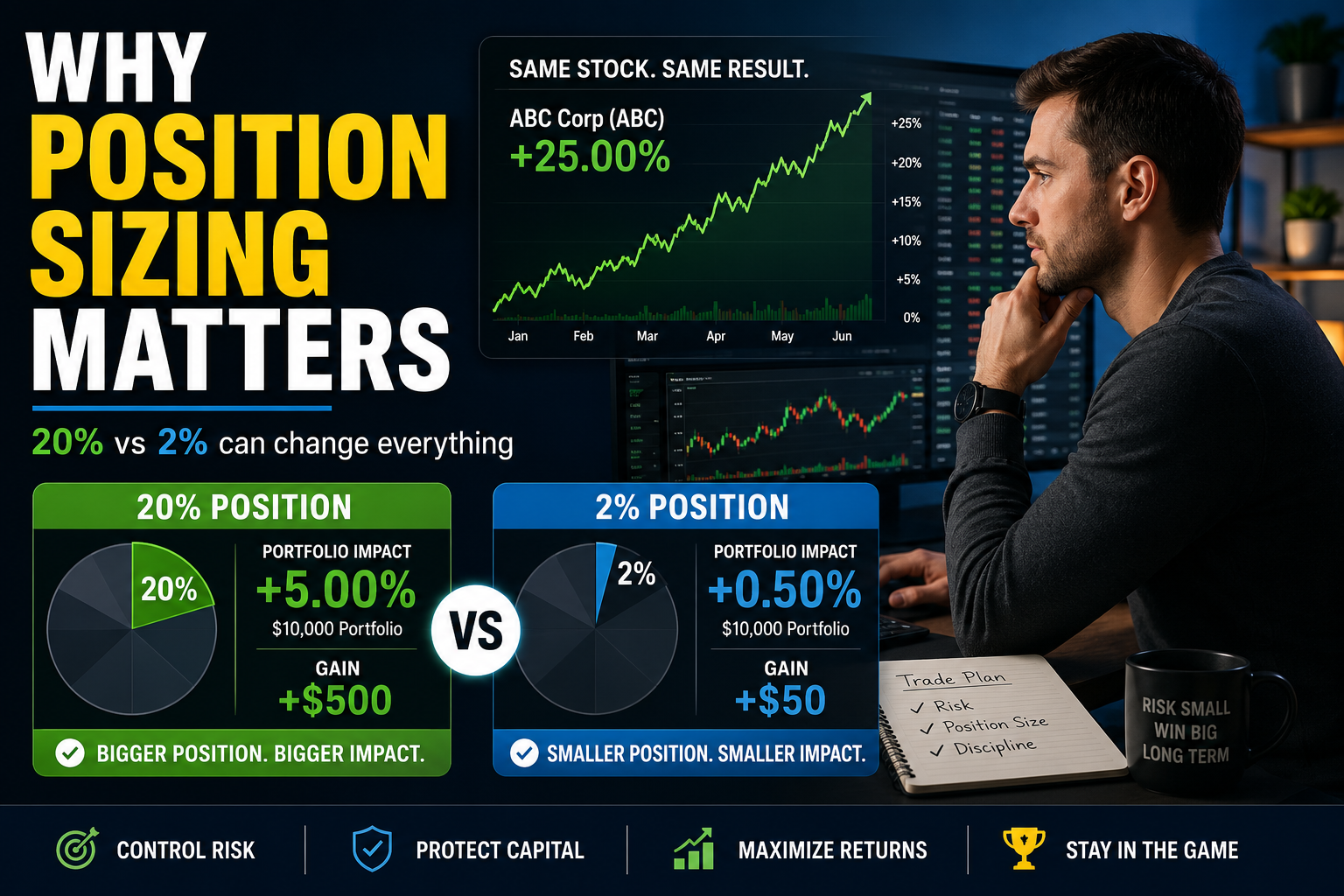
Why Position Sizing Matters More Than Most Traders Realise


Many beginner traders think the secret to successful investing is finding the perfect stock. They look for the next Nvidia, Micron or major index move, hoping one good idea will change their results. But professional investors often understand something far more important: the size of the trade matters just as much as the trade itself.
This is one of the biggest differences between hedge funds and the average retail trader. The best funds are not always buying mysterious assets that ordinary investors cannot access. In many cases, they own familiar names such as the S&P 500, Nasdaq ETFs, Nvidia, Micron and other large-cap stocks.
The real edge often comes from position sizing.
For example, imagine two funds both believe Micron will rise. Fund A puts 20% of its portfolio into Micron, while Fund B only puts 2% into the same stock. If Micron rises by 20%, Fund A could see a meaningful boost to performance. Fund B may barely notice the move.
This is why a trade without position sizing is not really a complete trade. The idea itself is only part of the decision. Traders also need to decide how much capital to risk, how strong their conviction is, how volatile the asset is, and what the potential reward looks like compared with the risk.
A highly volatile stock may need a smaller position than a more stable asset. A high-conviction trade may deserve more weight than a small speculative idea. This is where opinion becomes maths.
Beginner traders should be careful when following trade ideas online, especially when no weighting or risk plan is included. A stock tip may sound exciting, but without position sizing, the final result can look completely different from one trader to another.
In trading, the boring details often matter most. Position sizing may not sound exciting, but over time, it can be one of the biggest drivers of returns.

Tradable assets:
Min.Deposit:
Max Leverage:
FCA:

Rating:
 Earnings Calendar
  Economic Calendar
  VAT Calculator
  Tax Free Childcare Calculator
 Percentage Calculator
 Compound Interest Calculator
  Loan Overpayment Calculator
 Mortgage Calculator
 Credit Card Calculator
 Investing
  Economics
 Trading
  Technical Analysis
  Personal Finance
 Calculator