News
Tesla Q3 Update and Its Impact on the Stock
04 Oct 2026, 10:00


Join Minipip Academy and access free courses in investing, trading, economics, and more.
Sign Up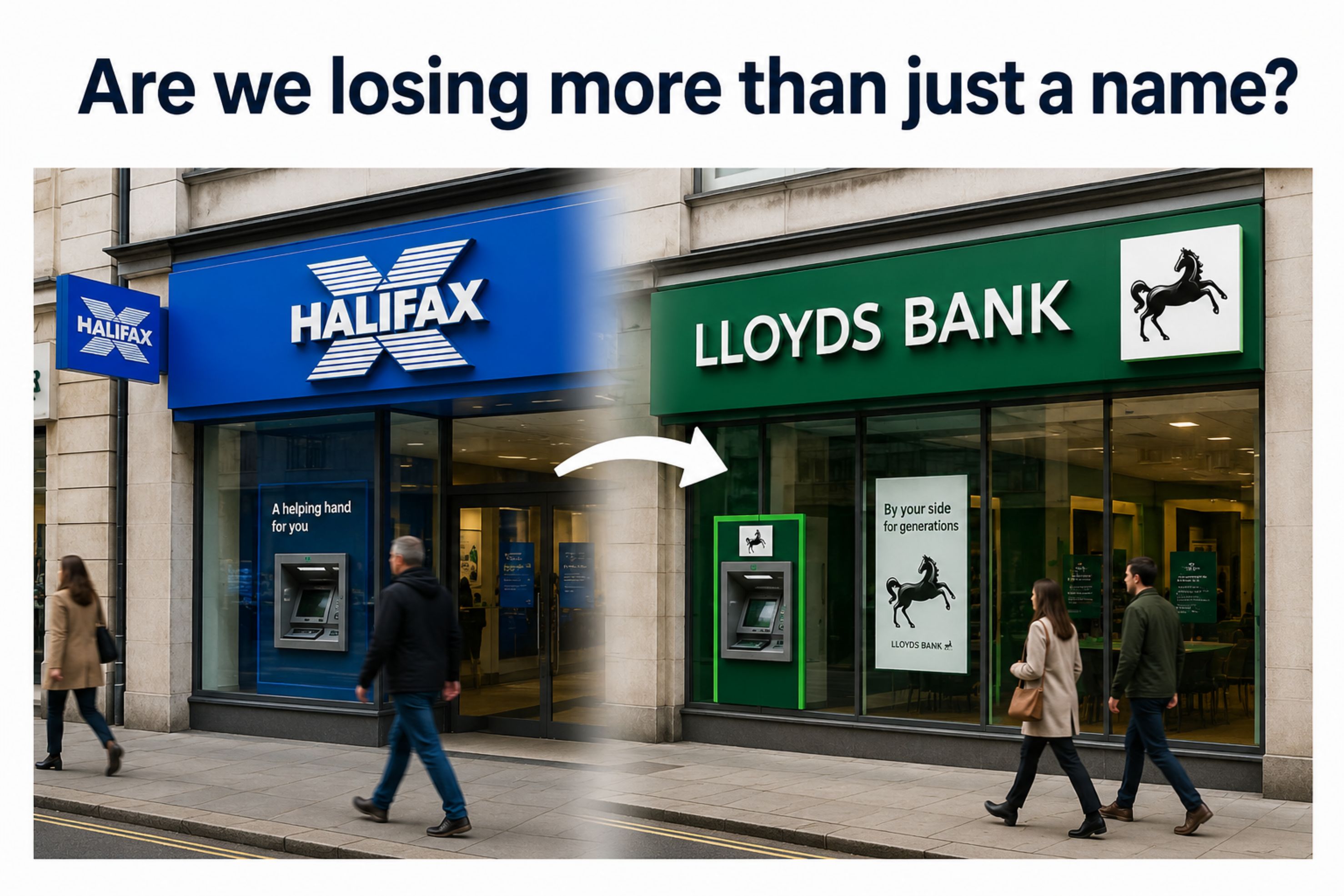
AI


Lloyds Banking Group has confirmed that the Halifax brand will be phased out and changed to Lloyds over time. On paper, this may sound like a simple banking update. Accounts are not being closed, sort codes are not changing, and customers are being told that day-to-day banking should continue as normal.
But for many people, including me, this feels bigger than an administrative change.
I have been a Lloyds Bank customer for around 40 years. I have also had a Halifax account, including my mortgage, for around 30 years. So I can see both sides. I understand the corporate logic behind simplifying brands, but I also know that customers do not only deal with banks through numbers, apps and sort codes. We deal with them through trust, habit and history.
Halifax has been part of the UK banking landscape for 173 years. It began as a building society and became strongly associated with home ownership, savings, mortgages and local banking. For customers who have used Halifax for decades, the name carries meaning.
The main changes are expected to include:
From Lloyds’ point of view, the decision is easy to understand. Lloyds, Halifax and Bank of Scotland already sit inside the same banking group. Customers can use shared services, products are often similar, and running multiple brands creates extra cost and complexity.
Fewer brands can mean:
However, the risk is that Lloyds sees this as simplification, while customers see it as loss.
Halifax is not just another logo. For many people, it is the bank they chose for their first mortgage, first savings account or family finances. Removing that name may not change how a direct debit works, but it changes the emotional relationship between the customer and the bank.
That matters because trust is one of the most important assets in banking. A bank can have strong technology and efficient systems, but if customers feel that a familiar name has been erased without proper respect, loyalty can weaken.
Lloyds will need to manage the change carefully. It should not simply tell customers that “nothing important is changing”. Instead, it should recognise that something important is changing: the identity of a brand many customers trusted.
Conclusion
For customers and investors, this move shows how UK banking is becoming more streamlined, digital and cost-focused. For Lloyds, the Halifax rebrand may improve efficiency and simplify operations, which could support the business over the long term.
But stock prices and investor sentiment are not only driven by cost savings. They are also influenced by reputation, customer loyalty and public reaction. If Lloyds handles the transition well, investors may see it as a sensible modernisation. If it feels careless, the loss of Halifax could become a brand mistake rather than a strategic success.
Sources: (Lloyds Group, Sky News, FT.com)

Tradable assets:
Min.Deposit:
Max Leverage:
FCA:

Rating:
 Earnings Calendar
  Economic Calendar
  VAT Calculator
  Tax Free Childcare Calculator
 Percentage Calculator
 Compound Interest Calculator
  Loan Overpayment Calculator
 Mortgage Calculator
 Credit Card Calculator
 Investing
  Economics
 Trading
  Technical Analysis
  Personal Finance
 Calculator