News
What Labour’s Leaked Plans Could Mean for Your Money
10 Oct 2026, 12:26


Join Minipip Academy and access free courses in investing, trading, economics, and more.
Sign Up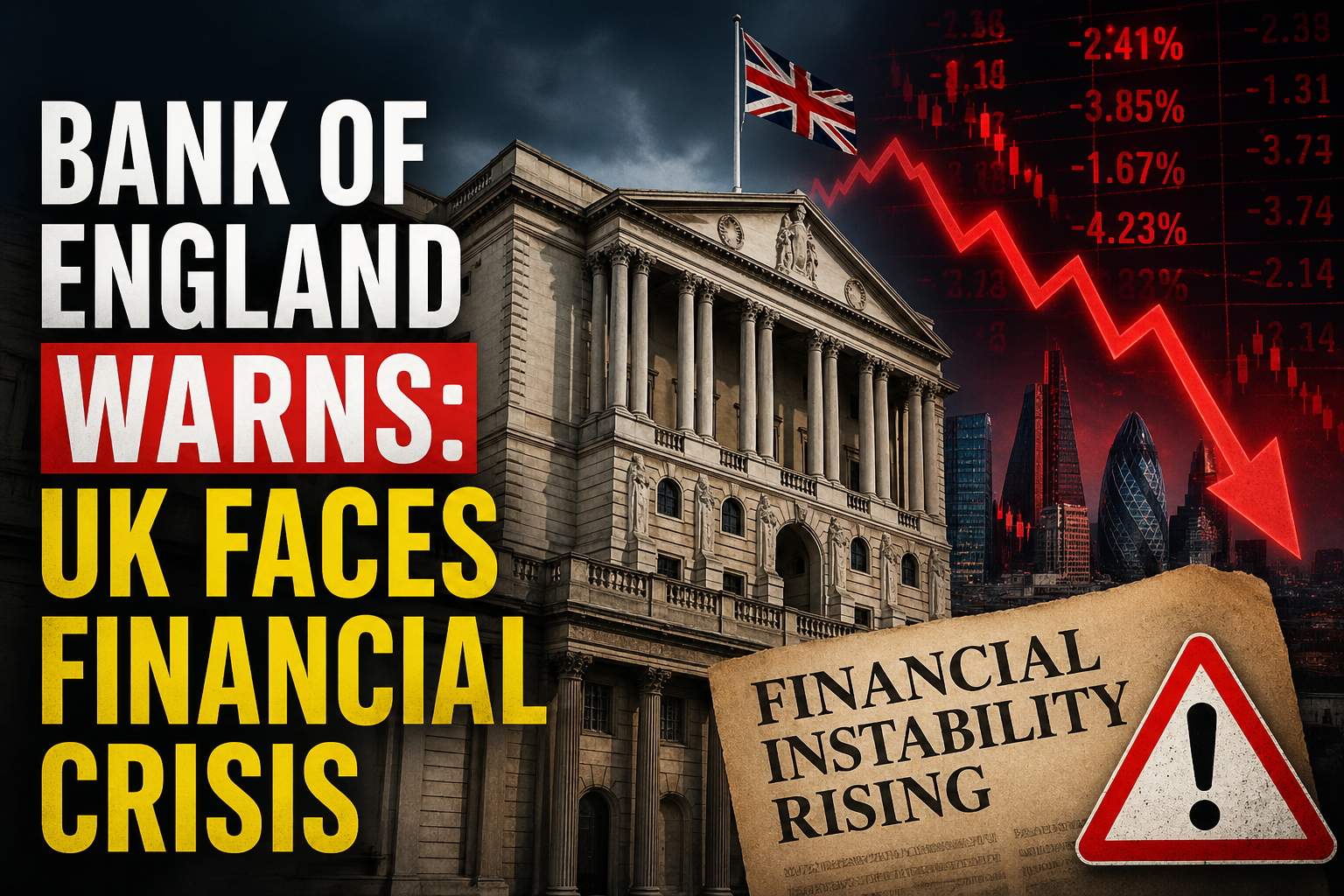
Bank of England Warns UK Faces Heightened Risk of Financial Crisis


The Bank of England has issued a stark warning that the United Kingdom is facing increased risks of financial instability, citing growing pressures in global markets, elevated asset prices, and mounting geopolitical tensions. The warning comes as officials raise concerns that current market valuations may not accurately reflect the scale of economic risks facing investors and businesses.
Sarah Breeden, Deputy Governor for Financial Stability at the Bank of England, cautioned that stock markets remain near record highs despite a deteriorating macroeconomic backdrop. She warned that a sharp market correction could occur if investors suddenly reassess risk, particularly given concerns over inflated artificial intelligence-related valuations and vulnerabilities in private credit markets.
The Bank’s Financial Policy Committee also highlighted that a “substantial macroeconomic shock” could expose multiple weaknesses across the financial system simultaneously. Officials pointed to fragile sovereign debt markets, stretched credit markets, and liquidity mismatches in investment funds as areas of concern.
These warnings come amid wider uncertainty caused by geopolitical conflict in the Middle East, rising energy prices, and persistent inflationary pressures, all of which threaten to weigh on UK economic growth. Analysts fear that if these pressures intensify, they could trigger tighter financial conditions, reduced business investment, and increased strain on households.
Despite the warning, the Bank stressed that the UK financial system remains resilient for now, with banks holding significantly stronger capital buffers than before the 2008 financial crisis. However, policymakers emphasised that resilience will be tested if economic shocks worsen.
The warning has prompted renewed debate over whether the UK economy is entering a period of heightened vulnerability, with economists cautioning that while a crisis is not inevitable, the risk of significant financial disruption has risen materially.

Tradable assets:
Min.Deposit:
Max Leverage:
FCA:

Rating:
 Earnings Calendar
  Economic Calendar
  VAT Calculator
  Tax Free Childcare Calculator
 Percentage Calculator
 Compound Interest Calculator
  Loan Overpayment Calculator
 Mortgage Calculator
 Credit Card Calculator
 Investing
  Economics
 Trading
  Technical Analysis
  Personal Finance
 Calculator