News
What Labour’s Leaked Plans Could Mean for Your Money
10 Oct 2026, 12:26


Join Minipip Academy and access free courses in investing, trading, economics, and more.
Sign Up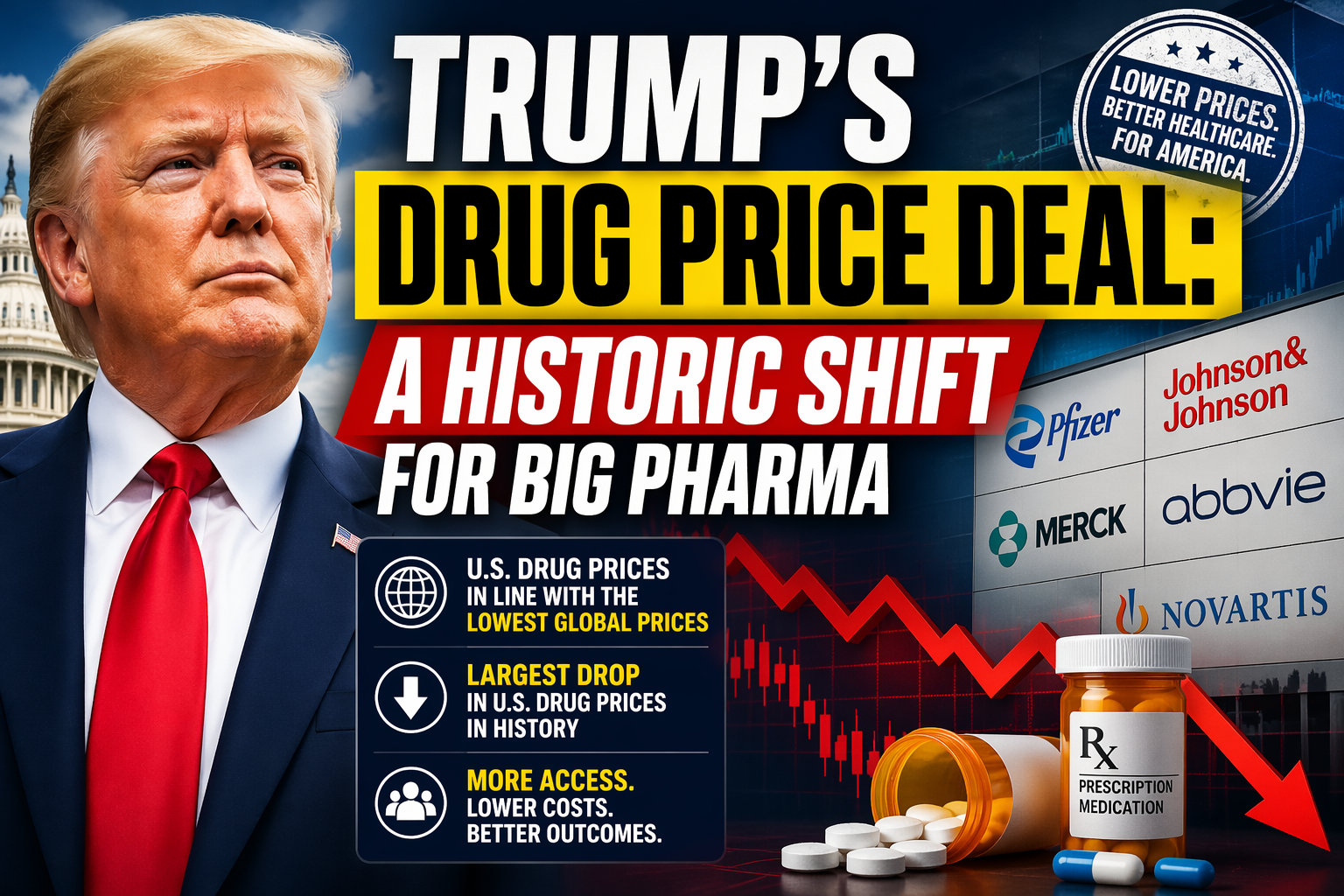
Trump’s Drug Price Deal: A Historic Shift for Big Pharma


The move comes after years of political pressure over the high cost of prescription drugs in the U.S., which has consistently exceeded prices in Europe and other developed markets. Policymakers have increasingly pushed for reform, arguing that American consumers have effectively subsidised global pharmaceutical profits.
Pharmaceutical companies appear to be responding to a combination of regulatory threats and shifting public sentiment. Faced with the risk of stricter legislation, pricing caps, or international reference pricing models, firms may have chosen to voluntarily reduce prices as a strategic compromise. Additionally, growing competition from generics and biosimilars has already begun to erode pricing power across the industry.
There is also a broader economic angle. With inflation and healthcare costs under scrutiny, lowering drug prices can be framed as a politically favourable move that supports consumers without requiring direct government spending increases.
For investors, the implications are significant. Lower drug prices directly impact revenue margins, particularly for large-cap pharmaceutical firms that rely heavily on premium pricing in the U.S. market.
In the short term, this is likely to create downward pressure on pharmaceutical stock prices as markets reprice future earnings expectations. Companies with high exposure to U.S. revenues may be hit hardest, while those with diversified global income streams could prove more resilient.
However, the long-term outlook is more nuanced. Reduced pricing could increase accessibility and volume, partially offsetting margin compression. Moreover, companies that adapt through innovation, cost efficiencies, and new drug pipelines may still deliver growth.
Based on recent market data, the largest pharmaceutical companies include:
These companies dominate global healthcare markets and are likely to be most impacted by structural pricing changes.
This policy shift marks a structural change for the pharmaceutical industry. While it introduces near-term uncertainty for investors, it could ultimately reshape the sector into a more competitive and globally aligned market.

Tradable assets:
Min.Deposit:
Max Leverage:
FCA:

Rating:
 Earnings Calendar
  Economic Calendar
  VAT Calculator
  Tax Free Childcare Calculator
 Percentage Calculator
 Compound Interest Calculator
  Loan Overpayment Calculator
 Mortgage Calculator
 Credit Card Calculator
 Investing
  Economics
 Trading
  Technical Analysis
  Personal Finance
 Calculator