Analysis
Amazon Stock Analysis: Can the Bullish Reversal Continue?
$254.36
19 Sep 2026, 12:29
Bullish


Join Minipip Academy and access free courses in investing, trading, economics, and more.
Sign Up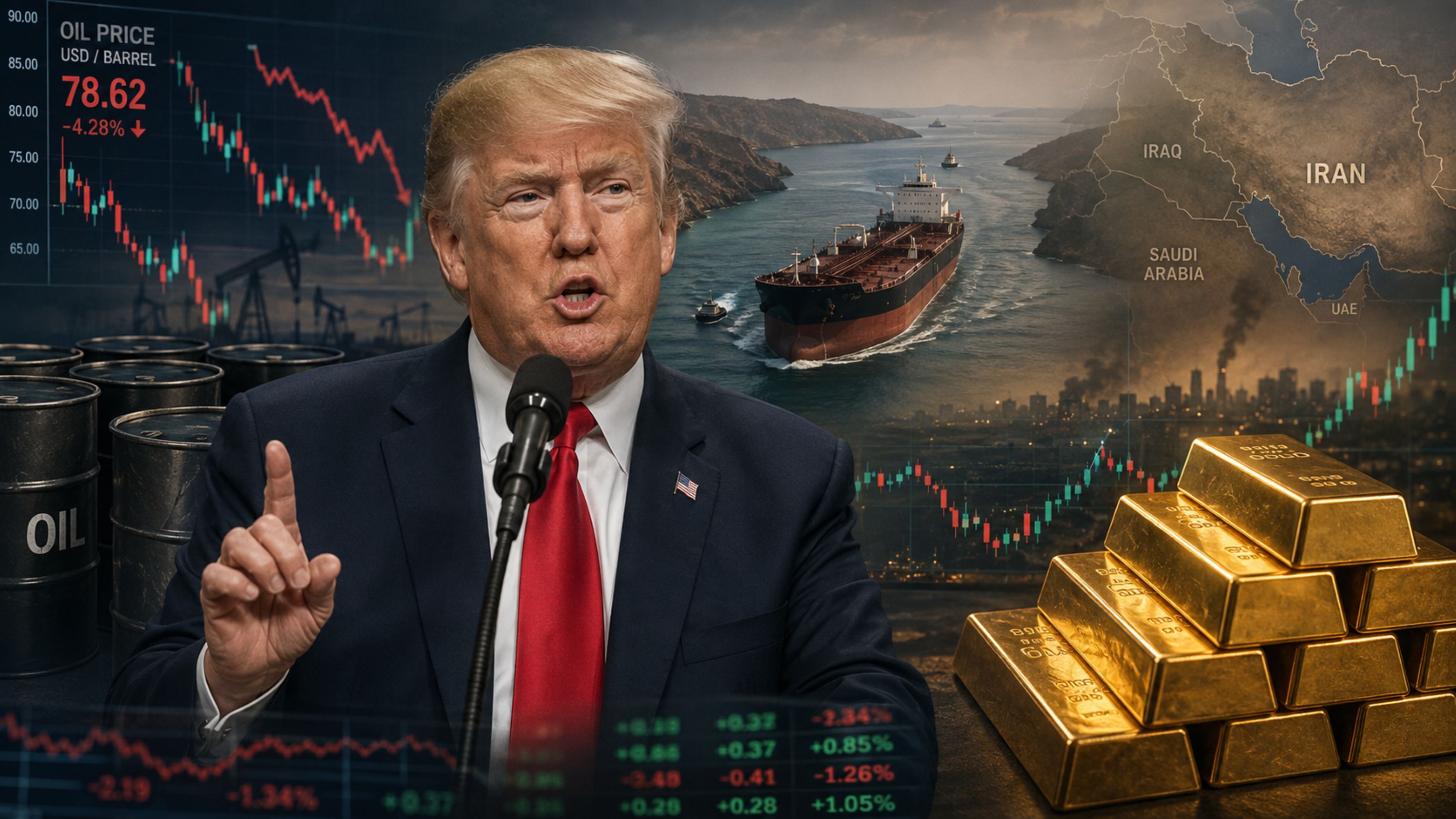
AI


President Donald Trump’s decisions surrounding the US-Iran conflict have had an immediate and significant effect on global financial markets.
Military threats, cancelled strikes and renewed diplomatic talks have repeatedly changed expectations for oil supplies, inflation and interest rates. As a result, traders have been forced to respond quickly to statements coming directly from the White House.
Oil has experienced some of the biggest movements. When the conflict escalated and shipping through the Strait of Hormuz appeared threatened, Brent crude moved above $100 a barrel. However, prices fell sharply after Trump ordered US forces to pause further attacks and supported renewed negotiations with Iran.
On 3 August, Brent crude fell to around $83.87 a barrel, while US crude dropped to approximately $80.79. Despite this decline, US oil remained roughly 20% higher than before the conflict began.
Why Trump’s Comments Move Oil Prices
The Strait of Hormuz is one of the world’s most important energy shipping routes. Any suggestion that it could be restricted increases fears of supply shortages.
Trump’s comments can therefore quickly influence:
When military action appears more likely, traders may buy oil because they expect supply disruption. When negotiations resume, that geopolitical risk premium can quickly disappear.
Gold Has Reacted Differently
Gold is traditionally viewed as a safe-haven investment during periods of political and economic uncertainty. However, its performance during the Iran conflict has been more complicated.
Rising oil prices can increase inflation expectations and encourage central banks to keep interest rates higher. Higher yields can make non-interest-paying gold less attractive.
When Trump paused military action and oil prices fell, gold rose as the US dollar and Treasury yields weakened. Spot gold gained around 0.4% to approximately $4,055 an ounce on 3 August.
This shows that gold is not simply responding to fear. It is also reacting to oil prices, inflation, interest rates and the value of the dollar.
Could Advance Knowledge Create a Trading Advantage?
A president naturally knows about military operations, negotiations and policy announcements before the wider public. In theory, knowing that a strike would be cancelled, delayed or approved could provide an enormous trading advantage.
Someone with advance knowledge could potentially position themselves in:
Friends, political colleagues or business associates receiving confidential information could potentially gain the same advantage. However, passing or trading on material non-public information may breach US securities, commodities or ethics laws.
The STOCK Act prohibits covered government officials and employees from using non-public information obtained through their positions for private profit. It also contains financial disclosure requirements covering the president and other senior officials.
There is currently no verified evidence in the sources reviewed that Trump or his associates made such trades.
However, concerns have grown following the launch of a paid Truth Social data service offering financial institutions extremely rapid access to Trump’s posts. Trump Media argues that the information is publicly released, while critics say faster access to market-moving announcements could give wealthy trading firms an advantage.
What This Means for Investors and Traders
Trump’s Iran policy has made political statements an important market catalyst.
For investors, the main risks include:
Markets may continue to move sharply while peace negotiations remain uncertain. Investors should therefore separate confirmed policy decisions from political threats and avoid assuming that every announcement will produce a lasting trend.

Tradable assets:
Min.Deposit:
Max Leverage:
FCA:

Rating:
 Earnings Calendar
  Economic Calendar
  VAT Calculator
  Tax Free Childcare Calculator
 Percentage Calculator
 Compound Interest Calculator
  Loan Overpayment Calculator
 Mortgage Calculator
 Credit Card Calculator
 Investing
  Economics
 Trading
  Technical Analysis
  Personal Finance
 Calculator