Analysis
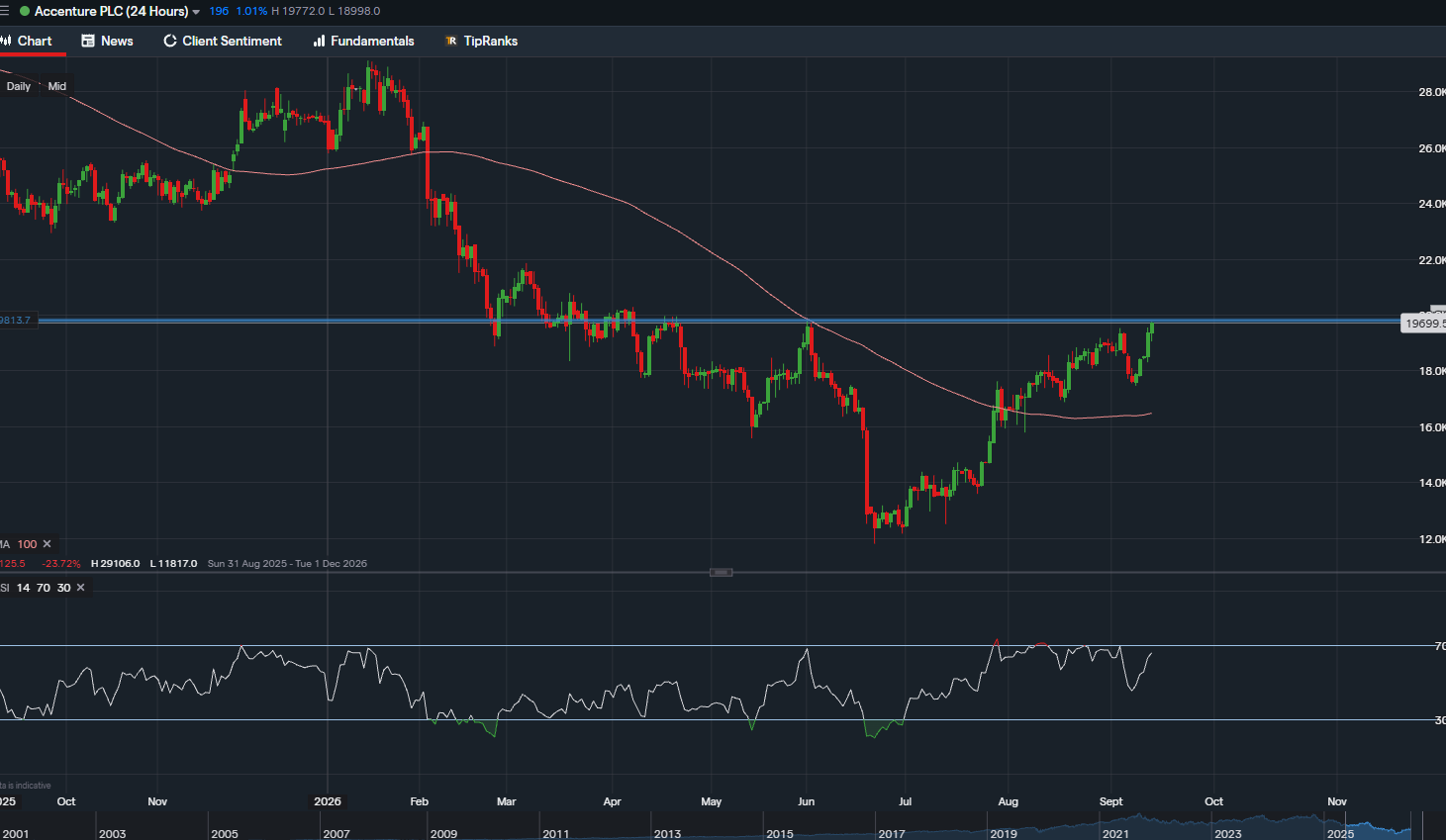
Accenture Tests Key Resistance as Earnings Loom
$197
15 Sep 2026, 18:47
Neutral


Join Minipip Academy and access free courses in investing, trading, economics, and more.
Sign Up
Pexels.com


The Bank of England has held interest rates steady at 3.75%, as policymakers grow increasingly concerned about rising inflation driven by higher energy prices.
The decision, made unanimously by the Monetary Policy Committee (MPC), was widely expected by markets. However, the tone of the latest update suggests that hopes for near-term rate cuts are fading as inflation risks intensify.
The latest announcement highlights a shift in focus from supporting growth to controlling inflation.
Important points include:
Interest rates held at 3.75%, with no members voting for a cut.
Inflation forecast raised significantly, with CPI expected to reach around 3% in Q2 and 3.5% in Q3.
The Bank removed earlier guidance suggesting rate cuts were likely.
Policymakers warned of increased risks of persistent inflation, particularly through wage and pricing pressures.
The central bank also confirmed it is closely monitoring the economic impact of rising energy costs.
The surge in energy costs linked to geopolitical tensions is now the biggest risk to the UK inflation outlook.
Recent developments include:
Oil prices rising more than 50% since the conflict began.
Natural gas prices doubling, increasing costs for households and businesses.
Higher input costs feeding through to goods and services across the economy.
Before the energy shock, inflation was expected to fall towards the Bank’s 2% target. That outlook has now changed significantly.
The shift in interest rate expectations is already affecting the UK housing market.
Key impacts include:
Mortgage rates rising above 4%, with cheaper deals disappearing from the market.
Lenders withdrawing products and repricing loans more frequently.
Swap rates increasing almost daily, reflecting expectations of higher borrowing costs.
For homeowners and buyers, this means higher monthly repayments and reduced affordability.
The Bank of England is not alone in maintaining a cautious stance.
Other major central banks have also kept rates unchanged:
The European Central Bank (ECB) held rates steady while signalling readiness to act.
The US Federal Reserve indicated it is not yet ready to cut rates, maintaining a hawkish outlook.
The Bank of Japan also held rates, although one member dissented.
This coordinated global approach reflects widespread concern about inflation returning due to higher energy prices.
The interest rate decision has important implications for financial markets.
Potential market impacts include:
Pressure on growth stocks, as higher interest rates reduce the present value of future earnings.
Weakness in housebuilders and property stocks, due to higher mortgage costs reducing demand.
Stronger performance in energy companies, benefiting from higher oil and gas prices.
Increased volatility in equity markets as investors reassess interest rate expectations.
Investors are now shifting focus from rate cuts to the possibility that rates could remain higher for longer.
The Bank of England faces a difficult balancing act between controlling inflation and supporting economic growth.
Key risks ahead include:
Rising inflation driven by energy costs
Slowing economic activity due to higher borrowing costs
Continued geopolitical uncertainty affecting global markets
Analysts suggest the Bank could still either cut or raise rates later in the year, depending on how energy prices and inflation evolve.
The Bank of England’s decision to hold rates signals a turning point in the economic outlook. With inflation rising again and energy prices surging, the path to lower interest rates has become far less certain.
For investors and households alike, the message is clear: borrowing costs may remain elevated for longer, and market conditions could stay volatile in the months ahead.
Sources: (Investing.com, Reuters.com)

Tradable assets:
Min.Deposit:
Max Leverage:
FCA:

Rating:
 Earnings Calendar
  Economic Calendar
  VAT Calculator
  Tax Free Childcare Calculator
 Percentage Calculator
 Compound Interest Calculator
  Loan Overpayment Calculator
 Mortgage Calculator
 Credit Card Calculator
 Investing
  Economics
 Trading
  Technical Analysis
  Personal Finance
 Calculator