Tesla Tipped to Lead Robotaxi Revolution
Analyst Sees 40% Upside and Growth Beyond Electric Vehicles
Tesla is being singled out by Wall Street as a potential leader in the emerging robotaxi market, with analysts forecasting significant growth for the company’s stock and future revenue streams as autonomous services scale up in 2026 and beyond.
Here’s a clearer overview of the latest insights — and what they could mean for investors.
Market Context: Robotaxis Near an Inflection Point
- New Street Research says the global robotaxi industry is approaching a major turning point as key players like Tesla and Waymo move toward commercial service launches in 2026.
- Independent reports project the robotaxi market could reach tens of billions by 2030, with some forecasts even higher depending on adoption and regulatory progress.
Robotaxis — fully autonomous vehicles that operate without a human driver — are seen as one of the fastest-growing segments of autonomous transport technology, driven by advances in AI, sensors and machine learning.
Why Analysts Are Bullish on Tesla
New Street Research’s Peter Vogel has highlighted several key structural advantages that, in his view, set Tesla apart from competitors:
- Low operating costs: Tesla’s vertically integrated approach and “vision-only” self-driving system could lead to a much lower cost per mile than rivals.
- Flexible supply model: Unlike competitors that must acquire or build fleet vehicles, Tesla can tap into its existing millions of customer-owned FSD-enabled vehicles to ramp up capacity.
- Massive real-world data advantage: Tesla’s fleet has already accrued billions of miles of driving data — far more than Waymo’s controlled test environments — which can accelerate autonomous development.
Vogel reiterated a Buy rating with a $600 price target, implying roughly 40% upside from current levels.
Expected Catalysts for Tesla in 2026
According to the report, key developments that could drive Tesla’s robotaxi narrative include:
- Progress toward unsupervised full self-driving (FSD)
- Removal of safety drivers from autonomous tests
- Start of Cybercab robotaxi production (expected mid-2026)
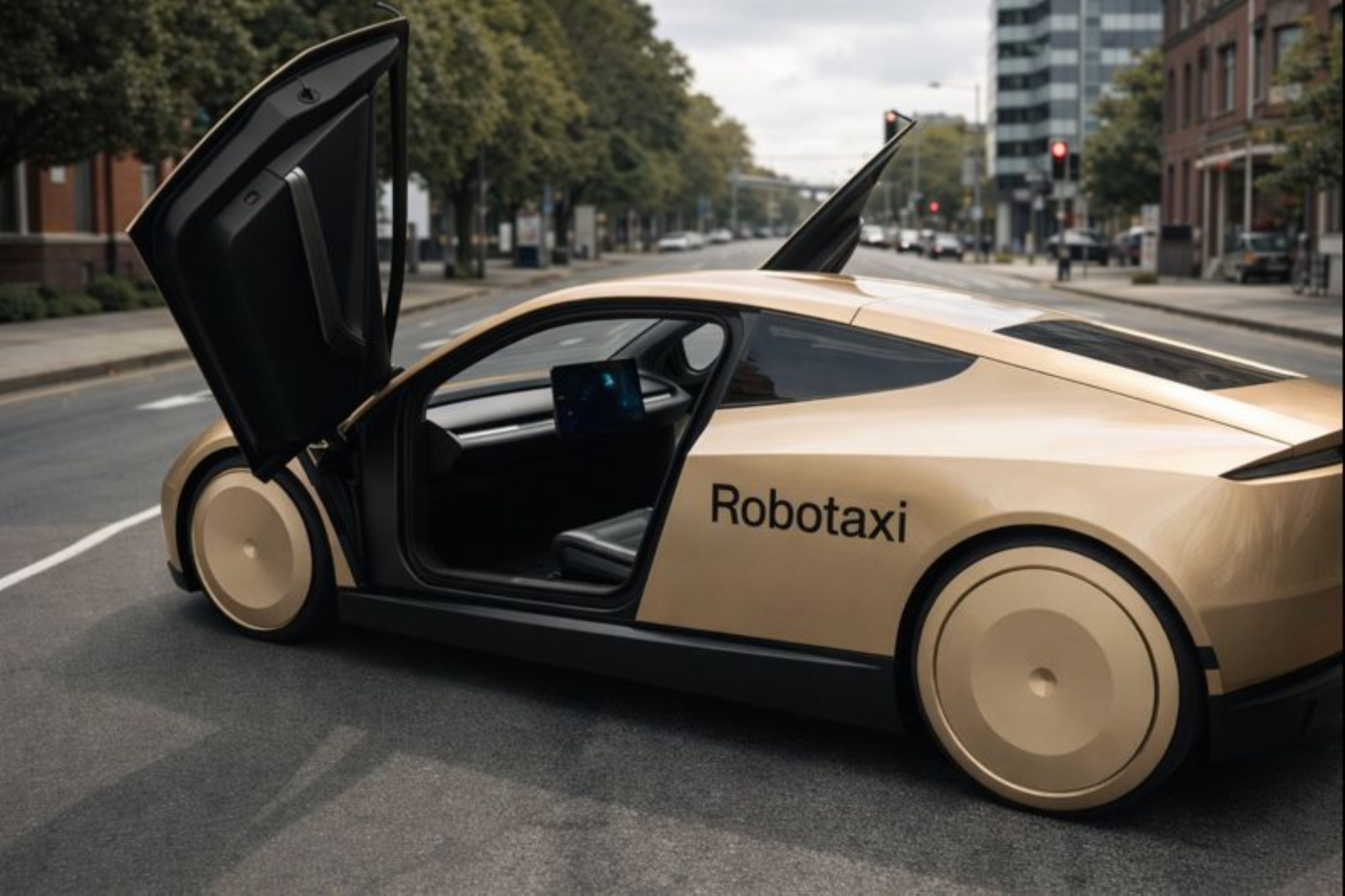
Tesla’s robotaxi vehicle — the Cybercab — is designed to be fully autonomous and part of Tesla’s future mobility services. Production is anticipated prior to 2027, although details remain limited.
Broader Market Signals and Competition
It’s important to consider the competitive landscape:
- Waymo already operates thousands of robotaxis and is expanding to more cities globally.
- New entrants, such as Uber’s robotaxi collaboration with Lucid and Nuro unveiled at CES 2026, add pressure and choice in the autonomous mobility space.
- New autonomous technology platforms — such as Nvidia’s AI driving systems — are intensifying competition across the industry.
These developments highlight that the autonomous vehicle sector still has several paths to innovation and market share — and Tesla is one among many rivals.
What This Might Mean for Investors
Potential Upsides:
- Stock Appreciation: A successful robotaxi rollout and rapid scaling could validate Tesla’s autonomous strategy and support further gains beyond the current robotaxi-led optimism. Price targets around $600 or higher have been discussed by multiple analysts.
- New Revenue Streams: Robotaxi services are expected to add substantial recurring revenue and profits by 2030, diversifying Tesla’s earnings away from car sales alone.
- Data Advantage: A large FSD dataset could become a competitive moat, allowing Tesla to refine and deploy autonomous capabilities more widely than rivals.
Key Risks:
- Regulatory Hurdles: Full self-driving approval remains uncertain in many jurisdictions, and delays could impact rollout timelines.
- Competition and Execution: With rapid development from competitors and technology partners, Tesla needs to maintain its pace and execution quality.
- Capital Demands: Scaling robotaxi operations and autonomous tech could require substantial investment and cash flow.
Summary
Tesla’s robotaxi ambitions are shaping up as a key part of its investment story in 2026 and beyond. With a strong data advantage, cost structure and a clear vision for autonomous transport, analysts see significant upside — albeit with notable execution and regulatory risks. The robotaxi market itself offers long-term growth potential that could redefine valuations if Tesla can execute its strategy successfully.
Sources: (Investing.com, TechGolly, Reuters.com)