News
Tesla Q3 Update and Its Impact on the Stock
04 Oct 2026, 10:00


Join Minipip Academy and access free courses in investing, trading, economics, and more.
Sign Up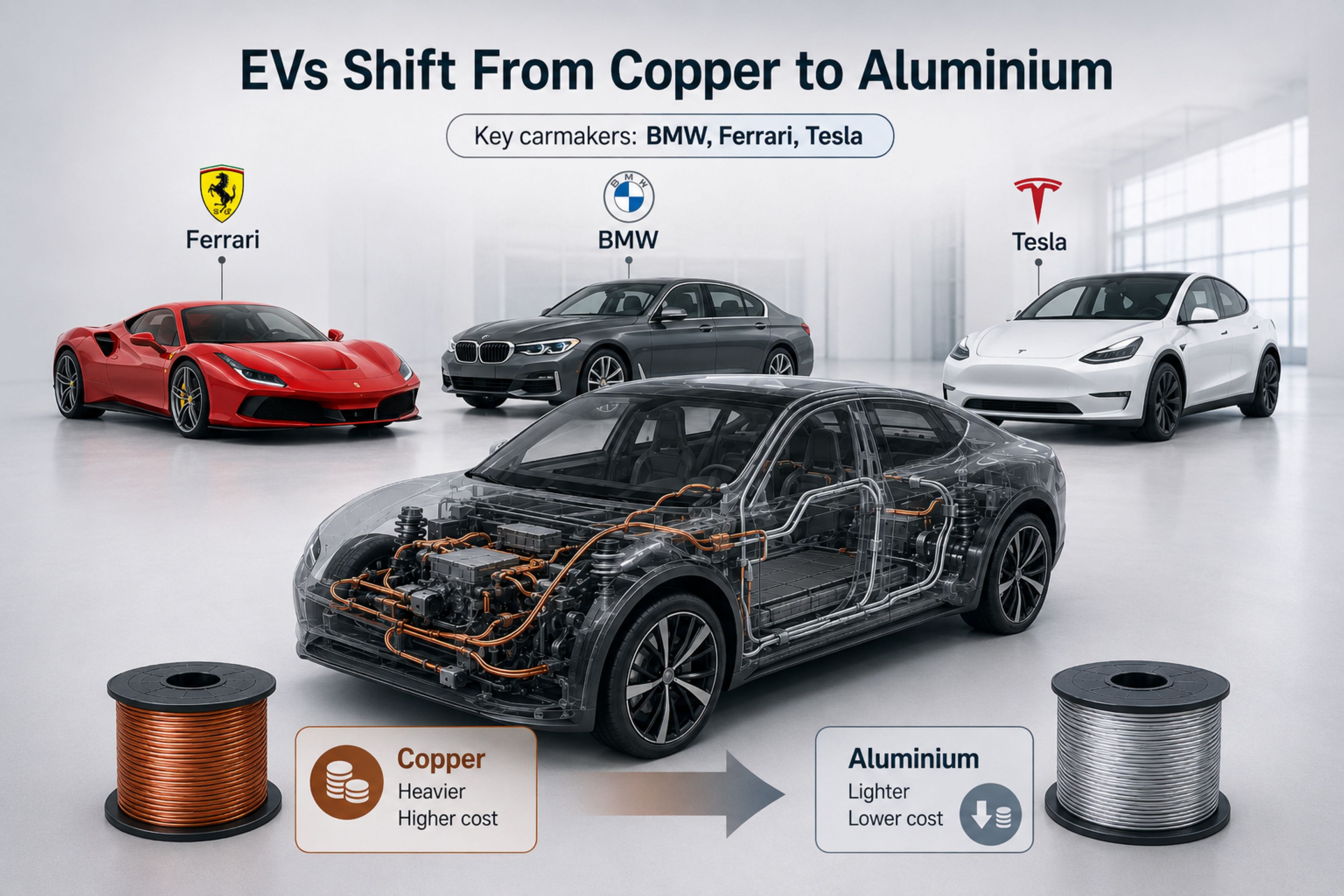
AI


Carmakers are turning to lighter, cheaper aluminium wiring as copper prices rise and electric vehicle competition intensifies.
Ferrari and BMW are joining Tesla and several Chinese electric vehicle makers in replacing some copper wiring with aluminium, as carmakers look for lighter and more cost-effective materials.
Copper has been the dominant material in electrical wiring for generations, thanks to its strong conductivity and reliability. However, rising copper prices, supply concerns and growing demand from green energy projects, data centres and electric vehicles are forcing manufacturers to rethink how they build future cars.
Aluminium is not as efficient as copper at conducting electricity, which means more material can be needed to achieve the same performance. Even so, it is much cheaper and lighter. This makes it attractive for electric vehicle makers, where reducing weight can help improve driving range and efficiency.
Ferrari has already started using aluminium power cables in its 296 hybrid sports car and has expanded the material into other models, including its first electric vehicle, the Luce. The company said aluminium wiring can reduce total wiring weight by up to 20%. For a performance-focused carmaker, lower weight is especially important because it can support speed, handling and efficiency.
BMW has also been using aluminium conductors for several years. The German carmaker first introduced them in its 1 Series in 2011 and has since expanded their use across hybrids and electric vehicles. Its latest eDrive technology uses aluminium cables in both high and low-voltage systems.
The main reasons carmakers are making the switch include:
China is leading much of the change. Several Chinese EV makers, including AVATR, XPeng and Xiaomi, have already adopted aluminium wiring. This follows earlier moves by Tesla, which used aluminium wiring in the Model Y and later in the Cybertruck.
The shift is particularly important because China’s electric vehicle market is highly competitive. Price wars have squeezed margins, making cost savings more valuable. For EV companies, switching some wiring from copper to aluminium may help reduce expenses without sacrificing too much performance.
The wider metals market could also be affected. JPMorgan estimates that aluminium substitution may affect around 2% of global copper demand this year. In a more aggressive scenario, around 6% of annual copper demand could be replaced by aluminium by 2030.
However, the switch is not simple. Aluminium production requires a large amount of energy and can create higher greenhouse gas emissions. It is also less conductive than copper, meaning it may not be suitable for every electrical application. In areas where maximum efficiency and reliability are needed, copper is still likely to remain important.
Conclusion
The move from copper to aluminium shows how rising material costs are changing the car industry. Ferrari, BMW, Tesla and Chinese EV makers are not just chasing lower costs; they are also looking for lighter vehicles, better efficiency and stronger margins.
For investors, this trend is worth watching. It could benefit aluminium producers and companies developing lightweight EV components, while creating a long-term challenge for copper demand in some areas. However, copper is unlikely to disappear from vehicle wiring entirely, as its performance advantages still matter in many critical systems.
Sources: (Investing.com, Reuters.com)

Tradable assets:
Min.Deposit:
Max Leverage:
FCA:

Rating:
 Earnings Calendar
  Economic Calendar
  VAT Calculator
  Tax Free Childcare Calculator
 Percentage Calculator
 Compound Interest Calculator
  Loan Overpayment Calculator
 Mortgage Calculator
 Credit Card Calculator
 Investing
  Economics
 Trading
  Technical Analysis
  Personal Finance
 Calculator