News
Tesla Q3 Update and Its Impact on the Stock
04 Oct 2026, 10:00


Join Minipip Academy and access free courses in investing, trading, economics, and more.
Sign Up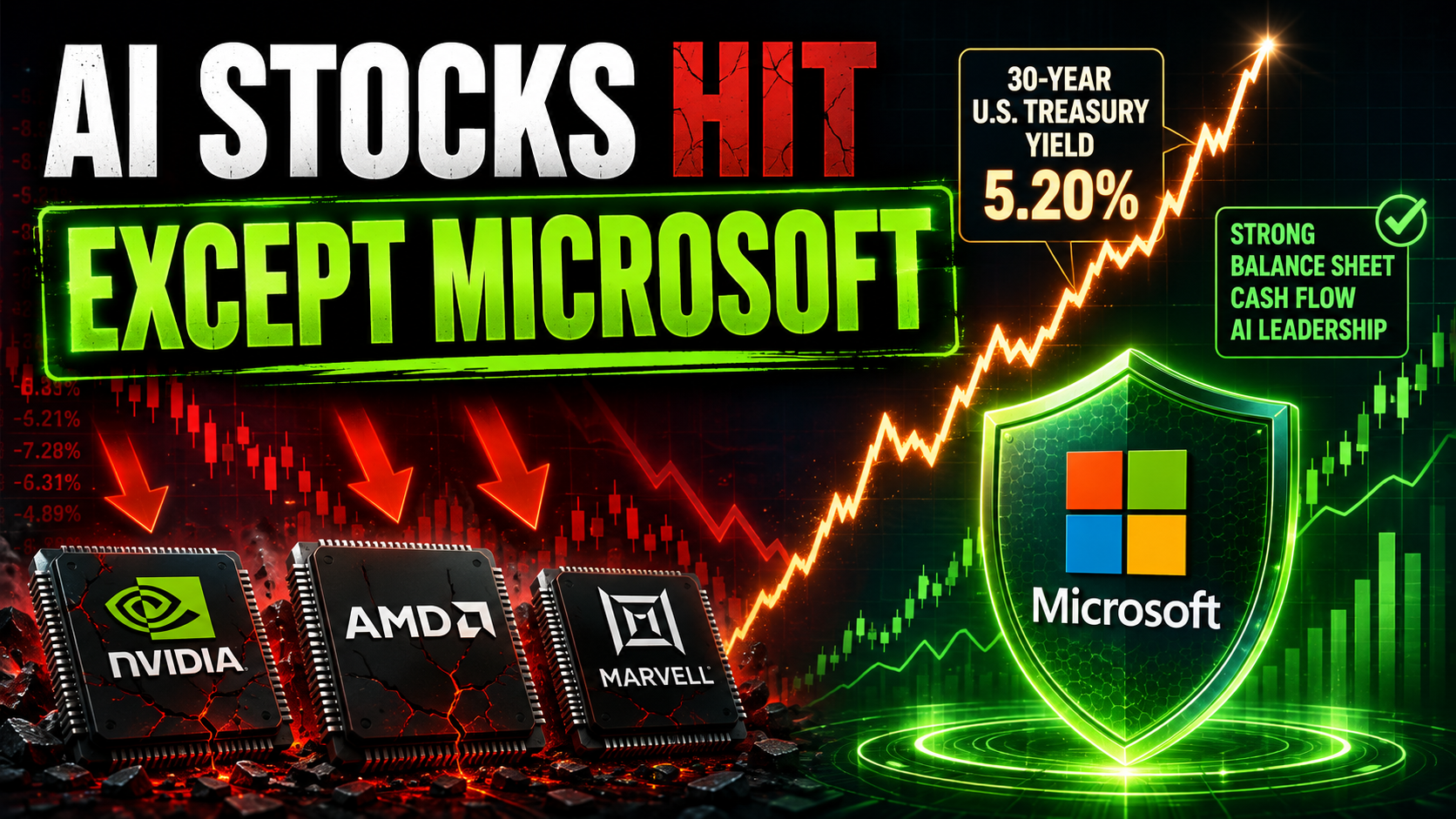
Why High Treasury Yields Could Hurt AI Stocks — Except Microsoft


Rising long-term interest rates may create pressure for major AI companies, but Microsoft could be better protected than many of its rivals.
Artificial intelligence stocks have been some of the biggest winners in the market, but rising US Treasury yields could create a new challenge for the sector.
An analysis comparing a basket of major AI stocks with movements in the 30-year US Treasury suggests that some technology companies are particularly sensitive to higher long-term interest rates.
According to the analysis, a 25-basis-point rise in the 30-year Treasury yield has historically been associated with significant pressure on several AI-related stocks.
AMD fell by around 9%, while semiconductor company Marvell declined approximately 10%. Nvidia appears somewhat less sensitive, with a decline of just 3.9%.
However, the exception was Microsoft.
Higher interest rates are normally considered negative for large technology companies because they increase borrowing costs and reduce the present value investors place on future earnings.
However, Microsoft's position was different because its cloud and AI businesses already generate substantial revenue.
Microsoft's Azure cloud platform is estimated to generate around $100 billion annually, while its wider AI business contributes approximately $37 billion.
This means Microsoft may be able to fund much of its artificial intelligence investment using cash generated by its existing operations rather than relying heavily on additional borrowing.
That could become increasingly important if Treasury yields remain elevated and borrowing becomes more expensive.
For investors, the key takeaway is that not every AI stock has the same exposure to higher interest rates. Chipmakers and companies requiring significant outside investment could face greater pressure, while cash-rich businesses such as Microsoft may be better positioned to continue investing even when financing conditions become more difficult.

Tradable assets:
Min.Deposit:
Max Leverage:
FCA:

Rating:
 Earnings Calendar
  Economic Calendar
  VAT Calculator
  Tax Free Childcare Calculator
 Percentage Calculator
 Compound Interest Calculator
  Loan Overpayment Calculator
 Mortgage Calculator
 Credit Card Calculator
 Investing
  Economics
 Trading
  Technical Analysis
  Personal Finance
 Calculator