Meta Platforms (META) Stock Analysis: Is META Undervalued After Earnings Pullback?
$644.82
16 Dec 2025, 13:17
Bullish

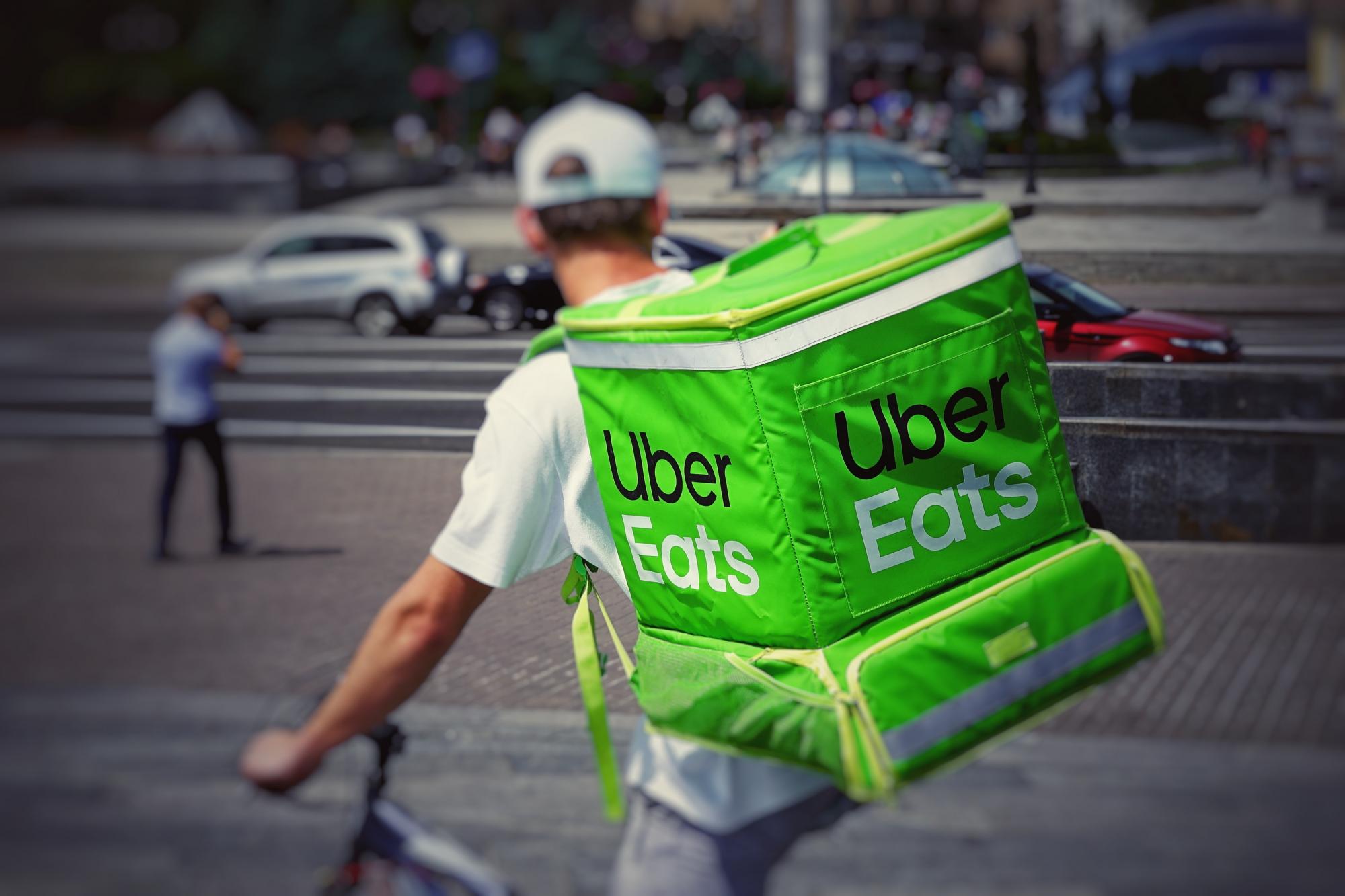
Image credit: Robert Anasch


Uber’s food delivery platform in Spain has agreed to pay severance to 4,400 riders fired by the company in 2021. In the court, Uber’s platform Portier Eats Spain conceded that the delivery riders were actually employed and will pay each of them the equivalent of 45 days’ salary per year they worked for the company. The riders lost their jobs following a new law in Spain in which food delivery companies must hire their couriers as staff instead of gig-economy self-employed contractors.
The case was first brought to the High Court last year by trade unions to challenge the mass lay-offs and was initially ruled as having a lack of standing. But in July , the Supreme Court overturned this decision and mandated a retrial, leading to this settlement. A local Spanish union UGT said in a statement: “This is a historic agreement, as it marks the first time a collective dismissal of delivery workers has been recognised in court.”
An Uber spokesperson told Reuters that the agreement with Spanish union workers “ aims at compensating couriers who were not able to access our app following the introduction of the Rider Law in 2021,” and that the platform has since launched a new model in compliance with the regulatory frameworks. They remain “open to dialogue.”
The change in Spanish law reflects the general labour concerns felt in various countries on the status of delivery riders for companies such as Uber and Deliveroo. As independent contractors instead of employees, delivery riders do not have access to labour rights measures such as a statutory minimum wage, paid holidays and pension rights.
In the UK case Uber BV and others (Appellants) v Aslam and others (Respondents), the Supreme Court is hearing whether the respondents were “workers” providing personal services to Uber and if so, what periods constitute their “working time,”
Uber are being challenged by their drivers who are claiming that they were workers for the purposes of the Employment Rights Act 1996, the National Minimum Wage Act 1998 and the Working Time Regulations 1998. Given that is affirmed, the Respondents claim that they were entitled to the minimum wage, paid leave and other legal protections. Uber argue that the Respondents were independent, third party contractors and not "workers".
The case summary states: “Following a preliminary hearing, the Employment Tribunal found that the Respondents were "workers" and that they were "working" whenever they (a) had the Appellants’ app switched on; (b) were within the territory in which they were authorised to work; and (c) were able and willing to accept assignments. These findings were upheld by the Employment Appeal Tribunal and the Court of Appeal. The Appellants now appeal to the Supreme Court.”
A similar case was heard in New Zealand. A group of Uber drivers won a landmark case against Uber which now must treat them as employees, not contractors and thus entitles them to worker rights and protections. In October, a New Zealand employment court ruled that the drivers were employees, not independent contractors. The ruling applies specifically to the case of four drivers, but the court acknowledged that it may have wider implications for drivers in similar working conditions across the country.
Chief Judge Christina Inglis wrote that the court “does not have jurisdiction to make broader declarations of employment status,” so all Uber drivers “do not, as a result of this judgement, instantly become employees. It may well have broader impact, particularly where, as here, there is apparent uniformity in the way in which the companies operate, and the framework under which drivers are engaged.”
The case was first brought by First union and E t? union, who said after the ruling that it was a “landmark legal decision not just for Aotearoa but also internationally.” In light of the verdict, First Union was now accepting Uber drivers as members and would move to initiate collective bargaining. One of the drivers involved in the case said that there is finally “justice for Uber drivers” who will now have a say and not be subjected to Uber’s control. An Uber spokesperson said the company was disappointed and would appeal the decision.
Meanwhile in Australia, a federal court has fined Uber 21 million AUS dollars ($14 million) for threatening cancellation fees it never charged and overstating fare estimates on some rides. The Australian arm of the company broke consumer law by misleading consumers with warnings that they would be charged for cancelling some rides from 2017 to 2021 and by using an inaccurate software algorithm to estimate fares for a taxi service it offered until August 2020.
The Australian Competition and Consumer Commission (ACCC) brought the case against Uber. Uber had already agreed on a fine of 26 million AUS dollars ($17.39 million), but Judge Michael Hugh O’Bryan said that the evidence provided by both sides was “grossly inadequate”, leaving him to speculate on the harm to consumers. Judge O’Bryan said in a written ruling that by supplying inaccurate information on its app, Uber “would be expected to lead a proportion of consumers to alter their decision and not proceed with the cancellation and perhaps deter future cancellations”, while distorting demand for its service.
The evidence supplied suggested that less than 0.5% of Uber customers had gone ahead with a trip due to concern about cancellation fees. The judge said that the UberTaxi algorithm overshot the fare estimation 89% of the time, but less than 1% of total Uber rides used that service. The ACCC Chair stated that the fine “clearly signals to businesses that misleading consumers about the cost of a product or service is a serious matter which can attract substantial penalties.”
It was also made clear by the court that the lower penalty that previously agreed “should not be understood as any reduction in the court’s resolve to impose penalties appropriate to… deterring contraventions of the Australian Consumer Law.”
Uber’s stock currently stands at 27.61 (USD), +0.58 (+2.15%) as of this morning.
(Sources: Reuters, Al Jazeera, Supreme Court UK, The Guardian)